

TL;DR:
- Independent UK restaurants operate on very slim profit margins making expense management critical.
- Tracking prime cost under 65% is essential to maintain profitability and avoid financial crises.
- Using automation tools and fostering a cost-conscious culture significantly improves expense control and profits.
Independent UK restaurants operate on razor-thin margins, with net margins often only 3–5% even when tables are full and reviews are glowing. That gap between revenue and profit is where expense management either saves or sinks your business. Most owners know costs matter, but far fewer have a clear system for tracking, benchmarking, and acting on the numbers week to week. This guide cuts through the noise. You'll find practical benchmarks, UK-specific pitfalls to avoid, the tools worth investing in, and a step-by-step plan to take genuine control of your restaurant's finances.
Table of Contents
- Why expense management is crucial for UK restaurants
- Common pitfalls and UK-specific nuances in restaurant expenses
- Essential tools and automation for modern expense control
- Practical action plan: How to implement smarter expense management
- Our perspective: The uncomfortable truth about restaurant expenses
- See real results with the right expense management solution
- Frequently asked questions
Key Takeaways
| Point | Details |
|---|---|
| Slim margins require rigour | Effective expense management is essential for UK restaurants due to typical profit margins of just 3–5%. |
| Automation unlocks savings | Modern tools can reduce your food costs, admin time, and errors, delivering quick ROI. |
| UK nuances matter | Factors like VAT thresholds, tronc for tips, and rent benchmarks are critical for British restaurants. |
| Culture drives continuity | Making expense control a daily, team-led habit ensures improvements stick. |
Why expense management is crucial for UK restaurants
With slim profit windows established, it's vital to understand why expense management sits right at the heart of running a sustainable restaurant. The term prime cost refers to the combined total of food costs and labour costs. It is the single most important number on your profit and loss statement, and prime cost should stay under 65% of revenue to remain viable. Most UK independents who struggle financially are running prime costs of 70% or higher without realising it.
Here is what a typical P&L looks like at industry averages for a UK independent restaurant with £500,000 annual revenue:
| Cost category | % of revenue | £ amount |
|---|---|---|
| Food costs | 30% | £150,000 |
| Labour costs | 33% | £165,000 |
| Prime cost | 63% | £315,000 |
| Rent and rates | 9% | £45,000 |
| Utilities and overheads | 8% | £40,000 |
| Other operating costs | 17% | £85,000 |
| Net profit | 3% | £15,000 |
UK food costs average 28–35%, and prime cost typically sits between 60–65%. Any overrun in food purchasing, staff scheduling, or rent renegotiation directly eats into that already slim net profit figure.
"Keeping prime cost below 65% is not just best practice. It is essential for survival in the current UK hospitality climate."
Three reasons why tight expense management is non-negotiable right now:
- Market volatility: Ingredient prices fluctuate sharply, particularly post-Brexit, making passive purchasing dangerous.
- Cost inflation: Energy bills and staff wages have risen significantly, compressing margins further.
- Regulatory demands: VAT thresholds, business rates relief changes, and National Insurance adjustments all affect your bottom line in ways that require active monitoring.
Building a system around prime cost reporting and consistent operating cost strategies is not optional for independents. It is the foundation of staying open.
Common pitfalls and UK-specific nuances in restaurant expenses
While industry benchmarks matter, attention to UK-specific quirks and common stumbling blocks makes a decisive difference. Many independent operators make the same avoidable mistakes, and the consequences compound quietly over months before becoming a crisis.
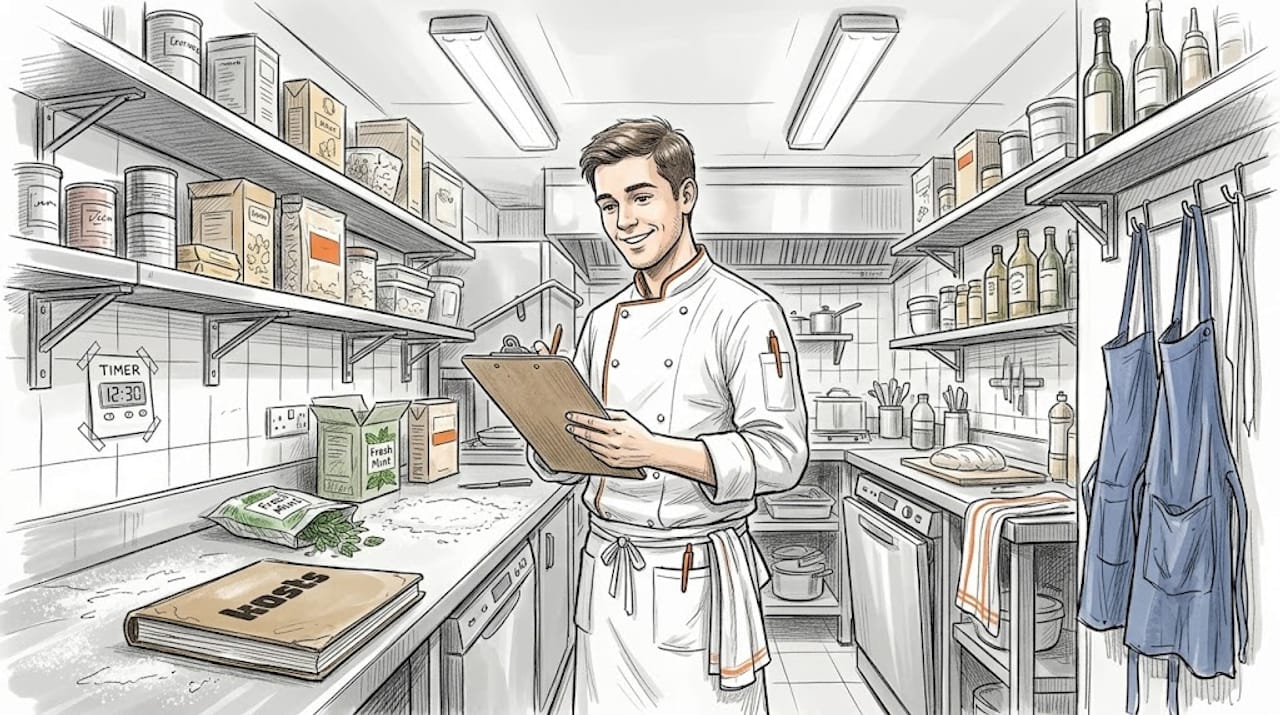
The most frequent mistakes include ignoring overhead benchmarks, poor stock control, VAT mismanagement, and underestimating the cost of staff overtime. Overheads above 25% of revenue or rent over 10% are serious warning signals that many owners overlook until renewal time.
Here is how best and worst-case practices compare on key overhead categories for a model restaurant with £500,000 revenue:
| Cost area | Best practice | Worst case |
|---|---|---|
| Rent | 8% (£40,000) | 14% (£70,000) |
| Utilities | 4% (£20,000) | 8% (£40,000) |
| National Insurance | Optimised via tronc | Full NI on all tips |
| Staff overtime | Scheduled, budgeted | Reactive, untracked |
UK-specific nuances deserve particular attention. The VAT registration threshold currently sits at £90,000 turnover. Crossing it without preparation triggers 20% VAT on most sales, which can devastate margins overnight if pricing has not been adjusted. Hot food rules add another layer: takeaway hot food is standard-rated for VAT, while cold food is often zero-rated, so getting this wrong creates compliance risk.
Tronc arrangements can save up to £8,000 per year in National Insurance contributions on staff tips. A tronc is a formal pooled tips system operated by an independent troncmaster, separate from the employer. It is one of the most underused savings mechanisms in UK hospitality.
Pro Tip: Set up a tronc scheme before you scale. Even small teams benefit, and the NI saving compounds year on year with minimal administrative effort once established.
A quick audit process to get your overheads under control:
- Pull three months of bank statements and categorise every outgoing payment.
- Calculate each overhead as a percentage of revenue for that period.
- Check your VAT registration status and review your food category classifications.
- Review payroll records for overtime patterns and identify scheduling inefficiencies.
- Benchmark your rent against the 10% guideline and flag for renegotiation if over.
For more detail on staying compliant and efficient, accounting tips for restaurants and a reliable food cost calculation workflow are worth building into your monthly routine.
Essential tools and automation for modern expense control
Once you conquer the basics and avoid major pitfalls, using the right tools accelerates expense optimisation and frees up your time. The good news is that the technology available to independents in 2026 is genuinely powerful and no longer priced exclusively for large chains.
The essential toolkit for a UK independent restaurant includes:
- POS integration: Your point-of-sale system should feed revenue data directly into your accounting software. Manual entry creates lag and errors.
- Digital invoice scanning: Photographing or emailing supplier invoices into a system that automatically extracts costs removes hours of data entry.
- Real-time inventory logs: Tracking stock movements daily prevents over-ordering and waste, two of the biggest silent cost drains.
- Recipe costing software: Knowing the exact cost of every dish means you can price confidently and spot margin erosion early.
- Daily dashboards: A live view of food cost percentage and gross profit removes the monthly-surprise problem entirely.
Automation can reduce food costs by 3% and cut admin time by up to 90%. That is not a marginal improvement. For a restaurant turning over £500,000, a 3% food cost reduction is £4,500 back in your pocket annually, with less time spent on paperwork.
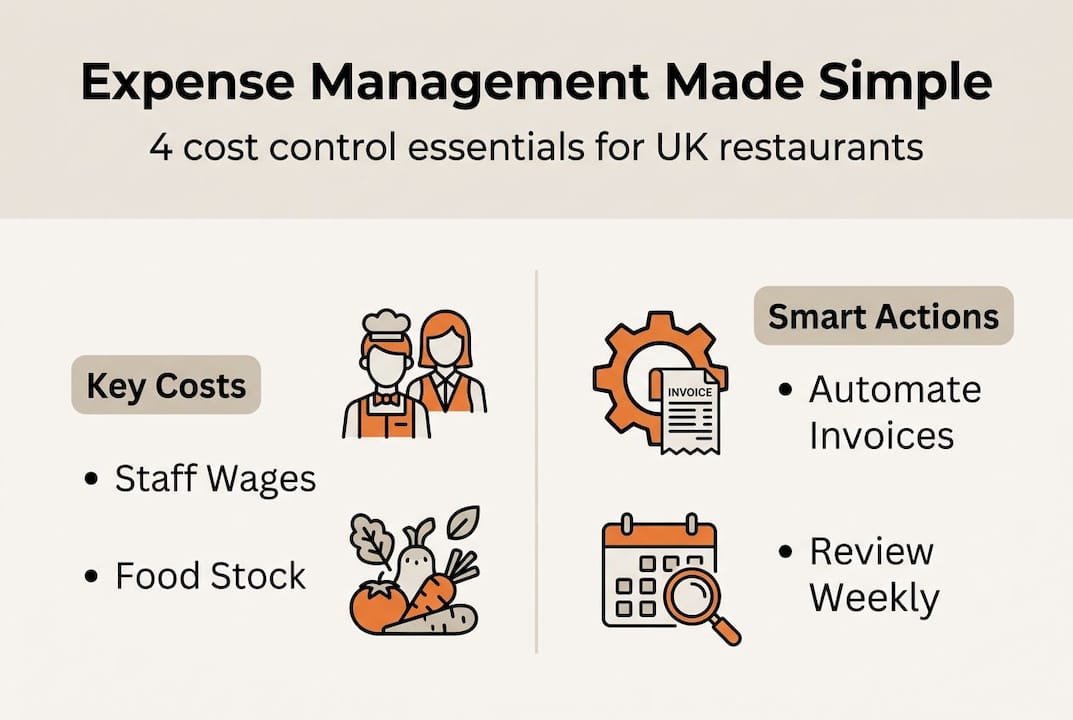
Real-world results back this up. Expense management time reduced to 10 minutes per day with a 2% gross profit uplift in documented case studies using integrated platforms. That kind of efficiency is achievable for independents too, not just large operators.
Pro Tip: Automate your supplier invoice uploads from day one. Even a basic system that flags unexpected price increases on recurring items will pay for itself within weeks by catching supplier errors and price creep.
Integrations matter enormously. Connecting Square or a similar POS to Xero means your revenue flows automatically into your accounts, and your cost data follows. The result is a live view of profitability rather than a monthly retrospective. Explore automated expense tracking and smart expense tracking approaches to find what fits your operation. A well-designed cost control workflow ties everything together.
Practical action plan: How to implement smarter expense management
Equipped with benchmarks and automation options, the next move is practical implementation tailored for UK independents. The following framework is designed to be started this week, not next quarter.
- Baseline audit: Gather the last 12 weeks of invoices, payroll records, and revenue figures. Calculate your current prime cost, food cost percentage, and overhead ratios.
- Set prime cost targets: Agree on a target prime cost below 65% and break it down into food and labour sub-targets. Write them down and share them with your head chef and manager.
- Choose your tools: Select a POS that integrates with your accounting software. Add an invoice scanning tool that removes manual data entry from your workflow.
- Train your team: Brief your kitchen team on portion control and waste logging. Brief front-of-house on the cost implications of comps, voids, and over-pouring.
- Weekly review: Block 30 minutes every Monday to review the previous week's food cost, labour cost, and gross profit. Compare against targets and act on variances immediately.
Operators cut food costs 3–5% and lift gross profit by 2 percentage points using integrated review and process improvements. The key word is integrated: the review only works if the data is accurate and timely, which is why automation is not a luxury.
Pro Tip: Involve your chefs in the weekly numbers review. When kitchen teams see their food cost percentage in real time, waste drops noticeably. Ownership of the data creates accountability without confrontation.
Quick wins to build early momentum include setting KPIs for food cost and labour cost in week one, reviewing your top five suppliers for price increases in week two, and scheduling your first team briefing on cost awareness in week three. For deeper guidance, food cost control methods and supplier spending tracking are practical next steps.
Our perspective: The uncomfortable truth about restaurant expenses
Here is what most guides will not tell you. Technology is not the hard part. The hard part is culture. Many UK independent owners know they should be tracking expenses more rigorously, but revert to spreadsheets or delegate entirely to a bookkeeper they speak to once a month. Neither approach works.
Expense management only delivers results when leadership genuinely owns it. Not the accountant. Not the head chef. You. The ROI of getting this right is enormous, but it only becomes visible when the numbers are reviewed frequently and acted on quickly. Reviewing once a month is too late. By the time a monthly report lands, four weeks of margin erosion have already happened.
The most effective operators we see share dashboards daily, involve their whole team in cost awareness, and treat expense management pitfalls as a leadership responsibility rather than an administrative task. That cultural shift, more than any software, is what separates restaurants that thrive from those that merely survive.
See real results with the right expense management solution
If you're ready to take control over expenses and unlock better profits, there's practical help at hand. Applying the framework in this guide is a strong start, but pairing it with a tool built specifically for UK independents accelerates everything.
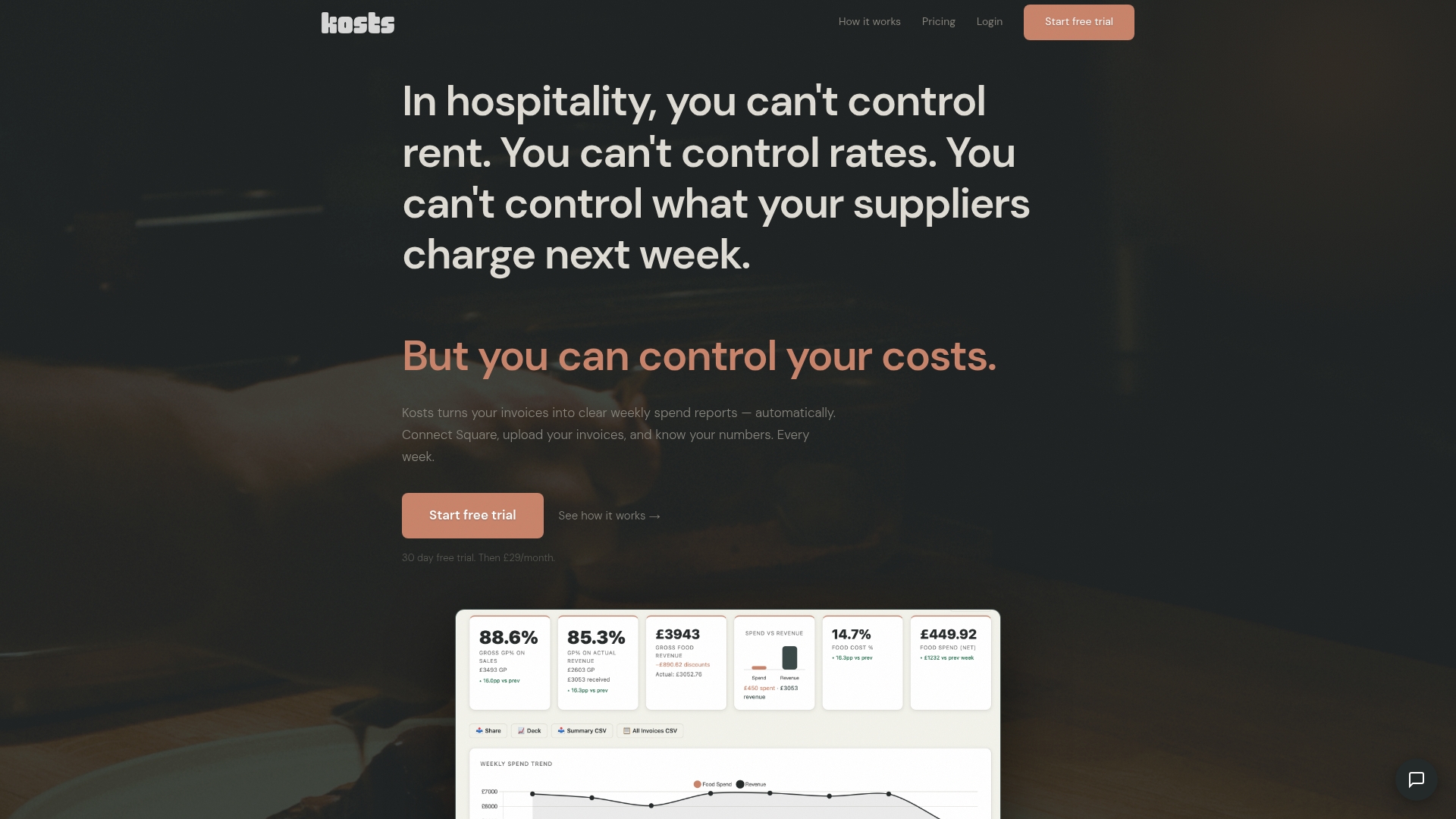
Kosts is designed for exactly this: converting your invoices into clear weekly spend reports, tracking food cost percentage and gross profit in real time, and integrating with Square and Xero so your revenue and costs stay in sync automatically. Built by a working chef, it is straightforward to set up and built around the realities of running an independent restaurant. Start your 30-day free trial and see the difference that genuine cost visibility makes to your bottom line.
Frequently asked questions
What is a good prime cost target for a UK restaurant?
Prime cost of 60–65% is the accepted UK norm. Anything above 65% puts profitability under serious pressure and should trigger an immediate review of food purchasing and staffing costs.
How can automation help restaurant expense management?
Automation reduces admin by up to 90% and can cut food costs by around 3% within months. The time saved alone frees up owners and managers to focus on revenue-generating activity rather than data entry.
What are the main UK-specific cost pitfalls for restaurants?
Rent above 10% of revenue is a red flag, unoptimised tip handling costs unnecessary National Insurance, and crossing the VAT threshold unprepared can devastate margins if pricing has not been adjusted in advance.
How often should restaurant owners review expenses?
Aim for daily dashboard checks and a structured weekly review of key metrics. Monthly reviews alone leave too much time for problems to compound before you can act on them.