
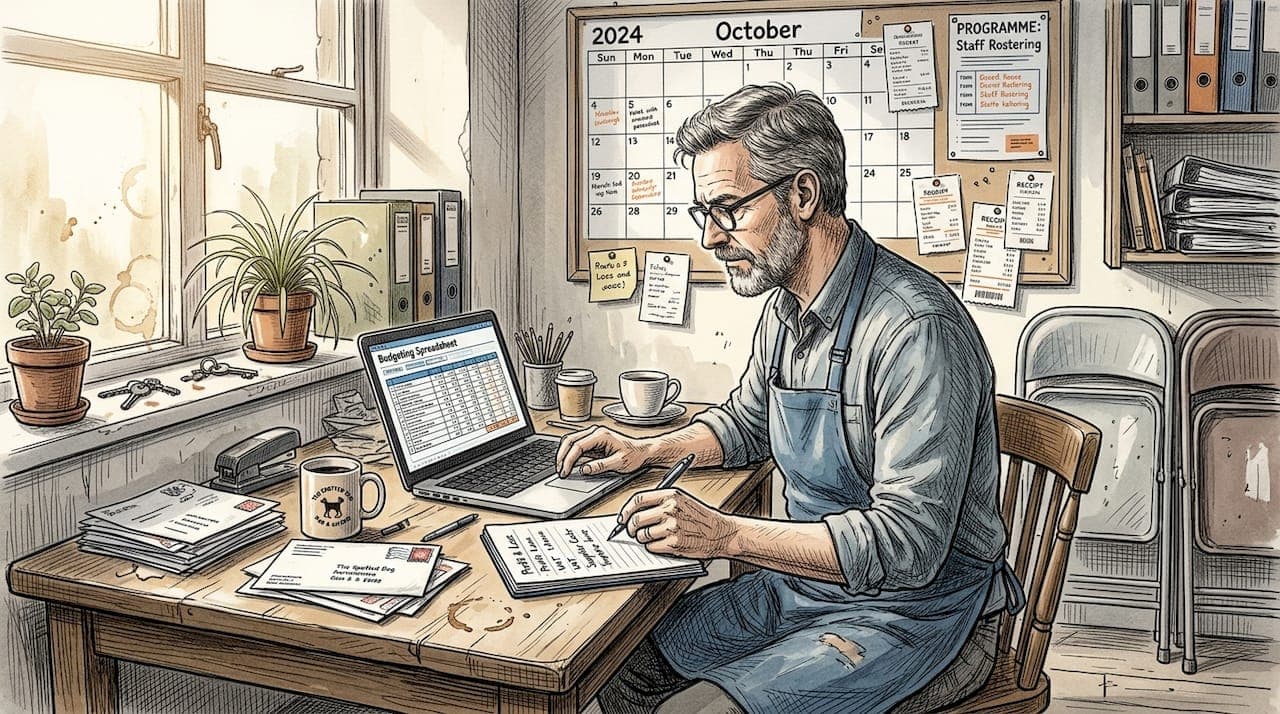
Running a profitable restaurant in the UK demands more than culinary skill and excellent service. Financial visibility often proves elusive for independent owners juggling fluctuating weekly trade, seasonal peaks, and rising costs. Traditional monthly budgets fail to capture the operational reality of hospitality businesses, leaving managers reacting to problems rather than preventing them. This article reveals practical budgeting strategies specifically designed for UK restaurants, from adopting a 13-period framework to addressing hidden labour costs and leveraging modern technology. You'll discover expert-backed methods to enhance cost control, build working capital resilience, and make informed decisions that protect your bottom line throughout the year.
Table of Contents
- Key Takeaways
- Building your budgeting framework: adopting 13 four-week periods
- Addressing fluctuating costs and seasonality in your budget
- Common pitfalls in restaurant budgeting and how to avoid them
- Leveraging technology and expert advice for better budgeting
- Discover Kosts app to simplify restaurant budgeting
- FAQ
Key Takeaways
| Point | Details |
|---|---|
| Thirteen period budgeting | Adopt a budgeting cycle of thirteen four week periods to align finance with weekly trading patterns and reduce distortions. |
| Full staff costs | Budget for the full staff burden including National Insurance and pension contributions to avoid under budgeting. |
| Working capital reserve | Build three to six months of working capital with a contingency of ten to fifteen percent to cushion fluctuations. |
| Gross profit focus | Track gross profit and spend per guest rather than relying solely on top line revenue to drive cost control. |
| Tech and accounting support | Leverage technology and professional accountants for real time visibility and specialist advice. |
Building your budgeting framework: adopting 13 four-week periods
Most restaurants operate on weekly cycles, yet many still force their finances into monthly buckets. This mismatch creates blind spots. Effective budgeting uses 13 four-week periods instead of monthly structures for better alignment with weekly trading patterns and seasonality. Each period contains exactly four weeks, providing consistent comparison points throughout the year.
Why does this matter? Monthly calendars vary between 28 and 31 days, making like-for-like comparisons impossible. A February with 28 days looks artificially weak compared to March with 31 days, even if weekly performance remains steady. The 13-period system eliminates this distortion, giving you accurate trend data to inform purchasing, staffing, and promotional decisions.
Implementing this framework requires coordination across your operations. Start by reconfiguring your accounting software to recognise four-week periods rather than calendar months. Most modern platforms support custom period definitions. Next, educate your management team on the new reporting cadence so everyone interprets performance data consistently. This transition typically takes one full cycle to become second nature.
The benefits extend beyond cleaner data. You'll spot seasonal patterns earlier, adjust inventory orders more precisely, and schedule staff based on actual trading rhythms rather than arbitrary month-end dates. Many operators find they can reduce waste by 8-12% simply by ordering on a four-week cycle that matches consumption patterns.
Pro Tip: Sync your POS data with period budgets for daily monitoring. This allows you to track cumulative performance within each four-week window and make mid-period adjustments before small issues become costly problems. A restaurant cost control workflow built around 13 periods transforms reactive management into proactive strategy.
Addressing fluctuating costs and seasonality in your budget
UK restaurants face relentless cost pressures that monthly budgets struggle to capture. Labour expenses continue climbing as the National Living Wage increases. Seasonal fluctuations create 40% revenue variance between summer peaks and winter troughs, while business rates for restaurants jumped 14% and supplier inflation persists at 6-9%. These factors demand sophisticated budgeting that anticipates rather than reacts.
Start with labour, your largest controllable expense. The National Living Wage rise to £12.41 in 2026 affects not just hourly rates but employer contributions too. When budgeting, calculate the full burden including National Insurance and pension contributions. A £12.41 hourly wage actually costs you closer to £14.15 per hour once all statutory costs are included. Multiply that across your entire team and the difference becomes substantial.
Seasonality requires a different approach for each revenue stream. Summer months might deliver 40% more covers than January, but costs don't scale proportionally. Fixed expenses like rent and business rates remain constant regardless of trade. Your budget should reflect higher gross profit targets during peak periods to subsidise quieter months, rather than expecting consistent margins year-round.
Build your annual budget by mapping historical trading patterns across all 13 periods. Identify your three strongest and three weakest periods, then set realistic targets for each. During planning, many operators make the mistake of averaging performance across the year, which leads to over-optimism in winter and complacency in summer.
"The combination of wage increases, business rate rises, and persistent food inflation means restaurant operators must budget with precision. A 2-3% margin error that seemed acceptable five years ago can now determine whether you break even or lose money." – Hospitality finance consultant
Create buffer zones in your budget for the inevitable surprises. Set aside 10-15% contingency within each period to absorb supplier price increases, equipment failures, or unexpected staff costs. This discipline prevents you from raiding next period's budget to cover current shortfalls, a pattern that compounds throughout the year.
Common pitfalls in restaurant budgeting and how to avoid them
Even experienced operators fall into predictable budgeting traps that undermine financial stability. Common pitfalls include underestimating contingencies, ignoring full staff costs including NI and pensions, and poor cash flow management for HMRC and payroll obligations. Recognising these errors helps you build more resilient financial plans.
The contingency gap proves particularly dangerous. Many restaurants budget to the penny, assuming everything will proceed exactly as planned. Reality delivers equipment breakdowns, last-minute staff absences requiring agency cover, and supplier shortages forcing premium purchases. Without a contingency buffer, these normal operational hiccups trigger crisis management and emergency borrowing.
Labour cost miscalculation represents another widespread problem. Operators often budget gross wages without accounting for employer National Insurance at 13.8% and pension contributions. This oversight can understate labour costs by 15-18%, creating a significant budget hole that only becomes apparent months into the year. By then, you've made commitments based on inaccurate assumptions.
Cash flow timing causes particular stress around tax and payroll obligations. HMRC expects VAT returns and PAYE payments on fixed schedules that rarely align with your revenue cycles. A quiet trading period that coincides with a tax payment deadline can drain working capital dangerously low. Smart budgeting anticipates these pinch points and builds cash reserves specifically for statutory obligations.
Pro Tip: Use budgeting software that tracks all labour-related costs comprehensively, including employer contributions. This prevents the common error of budgeting only for take-home wages. Integrated systems that connect your rota, payroll, and accounting provide real-time visibility into true labour costs, allowing you to adjust schedules before exceeding your budget. A streamlined cost control workflow catches these discrepancies early.
Another frequent mistake involves focusing exclusively on revenue targets while neglecting gross profit and cost per cover metrics. Two restaurants with identical revenue can have vastly different profitability based on their cost structures. Budget for gross profit percentage and average spend per guest rather than just top-line sales. This approach keeps you focused on profitable growth rather than vanity metrics.
Leveraging technology and expert advice for better budgeting
Modern budgeting demands modern tools. Professional accountants specialising in hospitality provide expertise in VAT, seasonal planning, and industry-specific challenges, whilst technology delivers real-time visibility that manual spreadsheets cannot match. The combination transforms budgeting from an annual chore into an ongoing strategic advantage.
Cloud accounting platforms integrated with your POS system capture every transaction automatically. This eliminates the data entry errors and time delays that plague spreadsheet-based budgeting. When your accounting software knows exactly what you sold yesterday and what you spent, you can compare actual performance against budget daily rather than discovering problems weeks later.
Specialist hospitality accountants bring sector knowledge that generalist firms lack. They understand the nuances of restaurant VAT treatment, the impact of seasonal trading on cash flow, and the specific allowances available to hospitality businesses. This expertise proves invaluable during budget planning, helping you optimise tax efficiency whilst remaining compliant.
| Technology solution | Key features | Budget benefits |
|---|---|---|
| Cloud accounting (Xero, QuickBooks) | Real-time data, automatic bank feeds, multi-user access | Eliminates manual entry errors, provides instant variance reporting |
| POS integration | Sales tracking, inventory management, staff performance | Aligns revenue budgets with actual trading patterns |
| Invoice scanning | Automated data extraction, supplier tracking, category allocation | Reduces processing time, improves cost visibility |
| Forecasting tools | Predictive analytics, scenario modelling, trend analysis | Enables proactive adjustments based on leading indicators |
The synergy between technology and professional advice amplifies both. Your accountant can interpret the real-time data your systems provide, spotting trends and anomalies that require strategic response. They might notice that your food cost percentage is creeping upward in specific categories or that labour costs are running ahead of revenue growth, prompting corrective action before the period closes.
Integrated systems also simplify the 13-period budgeting framework. Rather than manually calculating four-week totals, your software automatically aggregates data by your chosen periods. This makes period-on-period comparison effortless and ensures everyone works from consistent figures. Understanding types of restaurant refrigeration and other operational details helps you budget for equipment maintenance and replacement cycles more accurately.
Key advantages of combining technology with professional guidance include:
- Early warning systems that flag budget variances before they become critical
- Automated reporting that saves 10-15 hours monthly on manual reconciliation
- Scenario planning capabilities that model different trading conditions
- Compliance confidence knowing your VAT and tax obligations are handled correctly
- Strategic insights from advisors who understand restaurant economics intimately
Investing in proper cost control technology and qualified professional support pays for itself through improved decision-making and reduced financial surprises. The question isn't whether you can afford these tools, but whether you can afford to operate without them in an increasingly competitive market.
Discover Kosts app to simplify restaurant budgeting
Implementing the budgeting strategies outlined above becomes significantly easier with purpose-built tools. Kosts was designed specifically for UK independent restaurants, addressing the exact challenges discussed throughout this article. The platform converts your invoices into automated weekly spend reports, giving you the real-time cost visibility essential for effective budgeting.
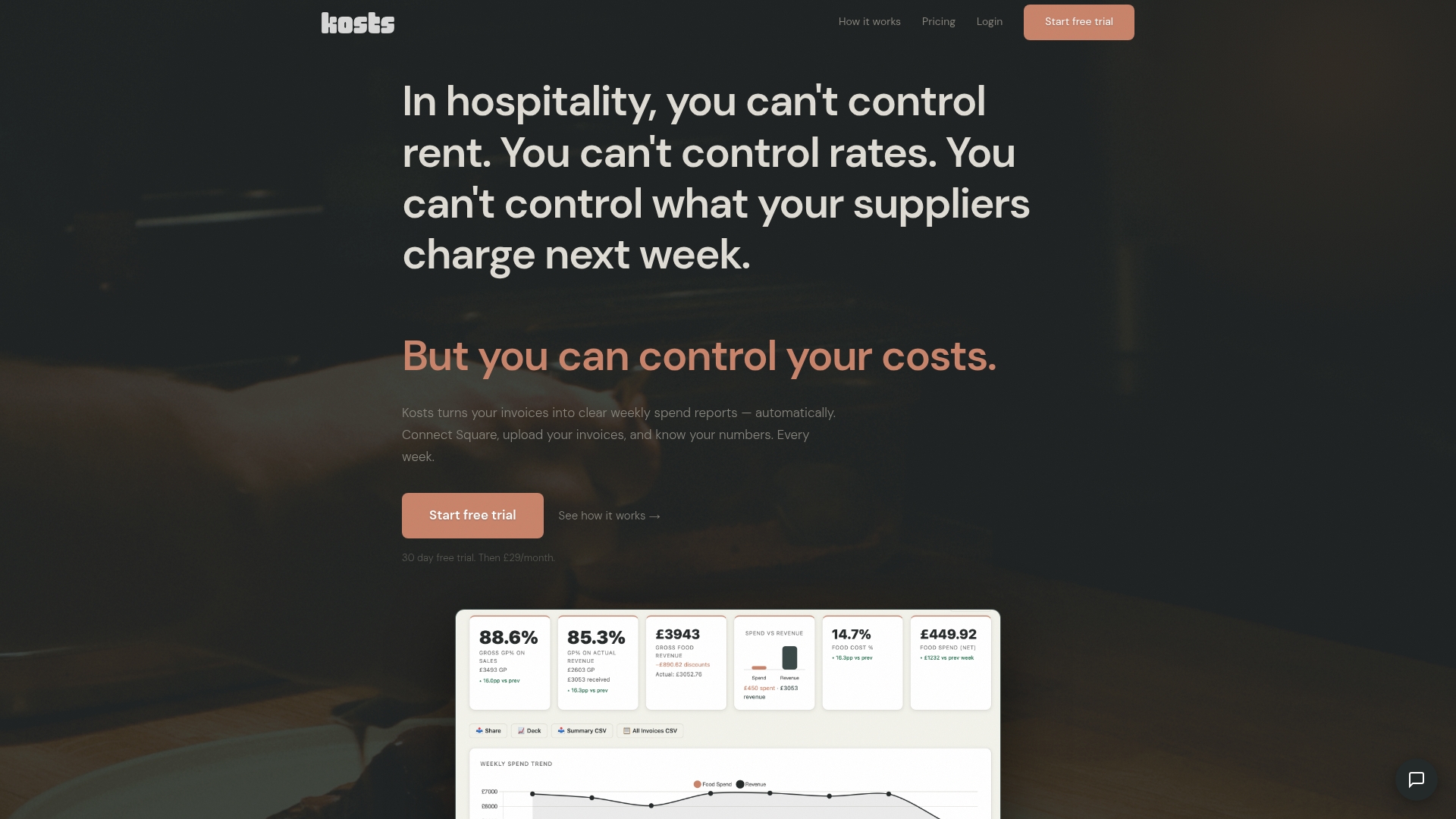
Kosts integrates with your existing payment systems and accounting software like Square and Xero, automatically importing revenue data and synchronising financial information. This eliminates manual data entry whilst ensuring your budget comparisons reflect actual performance. The dashboard breaks down expenditure by supplier and category across weekly, monthly, or four-week periods, making the 13-period framework simple to implement. Built by a working chef who understands operational realities, Kosts focuses on the metrics that matter most, including food cost percentage, gross profit, and spend per guest. The 30-day free trial lets you experience how automated cost tracking transforms budgeting from a monthly headache into a daily competitive advantage.
FAQ
How can I adjust my restaurant budget for seasonal changes?
Adopt a 13 four-week period structure that aligns with weekly trading patterns rather than calendar months. Plan for revenue variance up to 40% between peak summer and quiet winter periods by building contingency buffers and adjusting staffing levels to match anticipated demand. Review historical data to identify your strongest and weakest periods, then set differentiated targets that account for seasonal realities rather than averaging performance across the year.
What are the hidden labour costs to include in my budget?
Beyond gross wages, you must account for employer National Insurance contributions at 13.8% and pension contributions, which together can increase total labour costs by 15-18%. For example, a £12.41 hourly wage actually costs approximately £14.15 per hour once all statutory obligations are included. Failing to budget these expenses creates significant shortfalls that only become apparent months into your financial year when corrective action becomes difficult.
How can technology improve restaurant budgeting accuracy?
Cloud accounting systems provide real-time data that eliminates the delays and errors inherent in manual spreadsheets. POS integrations automatically capture sales and inventory movements, allowing you to compare actual performance against budget daily rather than monthly. This immediate visibility enables mid-period adjustments before small variances become major problems. Restaurant cost control technology also automates variance reporting, saving 10-15 hours monthly whilst improving decision-making quality through consistent, accurate data.
Why should I use 13 periods instead of 12 months for restaurant budgeting?
Monthly calendars vary between 28 and 31 days, making accurate performance comparisons impossible. A 13-period year divides into exactly four weeks per period, providing consistent measurement intervals that align with how restaurants actually operate. This structure captures weekly trading patterns and seasonal fluctuations more accurately, enabling better forecasting and resource allocation. Most operators find they can reduce waste and improve staffing efficiency by 8-12% simply by budgeting in four-week cycles that match operational reality.