

Managing food costs effectively remains one of the toughest challenges for independent UK restaurant owners. With net margins hovering around 3-5%, every percentage point matters. Yet balancing profitability with quality feels like walking a tightrope. You need to control expenses without compromising the dishes that keep customers coming back. This article delivers a practical, step-by-step checklist designed specifically for independent operators who want to optimise food cost management using modern technology and proven strategies. You'll learn actionable methods to audit costs, standardise operations, calculate margins accurately, and leverage digital tools to maintain profitability whilst protecting quality.
Table of Contents
- Key takeaways
- Establishing your baseline food cost audit
- Standardise recipes and portion sizes for consistency
- Weekly food cost calculation and menu engineering
- Leveraging technology: price alerts and prime cost monitoring
- Discover technology to simplify your food cost control
- Frequently asked questions
Key Takeaways
| Point | Details |
|---|---|
| Baseline cost audit | Conduct a thorough audit of invoices and inventory to establish where money goes. |
| Standardise recipes and portions | Develop detailed recipe cards and fixed portion sizes to ensure consistent costing and quality across the kitchen. |
| Weekly cost calculation | Compute actual food costs every week to provide timely insights and spot trends. |
| High margin menus | Prioritise menu items with the strongest margins to protect profitability. |
Establishing your baseline food cost audit
You cannot improve what you do not measure. The first step in any food cost control checklist involves conducting a thorough baseline audit of your current expenses. This means systematically reviewing every supplier invoice and conducting a complete inventory count to understand exactly where your money goes.
Start by gathering all invoices from the past month. Check each one for pricing accuracy, comparing current rates against previous orders to spot unexpected increases. Look for duplicate charges, incorrect quantities, or items you never received. These errors happen more often than you might think, and catching them early protects your margins.
Next, perform a comprehensive inventory count. Weigh and measure everything in your walk-ins, dry storage, and prep areas. Compare actual quantities against what your records show you should have. The difference between these numbers reveals waste, theft, or recording errors that silently drain profits. Document your findings meticulously because this baseline becomes your reference point for measuring future improvements.
Common pitfalls include rushing through counts, failing to convert units consistently, or skipping low-value items that collectively represent significant costs. Avoid these mistakes by scheduling audits during quiet periods and involving multiple team members to verify accuracy. Consider implementing a streamlined restaurant cost control workflow to maintain consistency.
Pro Tip: Use digital tools or software to automate invoice tracking and inventory logging. Manual spreadsheets introduce errors and consume valuable time you could spend on other aspects of your business. Modern platforms capture data instantly and flag discrepancies automatically.
Standardise recipes and portion sizes for consistency
Once you understand your baseline costs, the next critical step involves standardising recipes and portion sizes. This practice ensures every dish costs exactly what you expect, regardless of which team member prepares it. Without standardisation, your food costs fluctuate unpredictably as different cooks use varying amounts of ingredients.
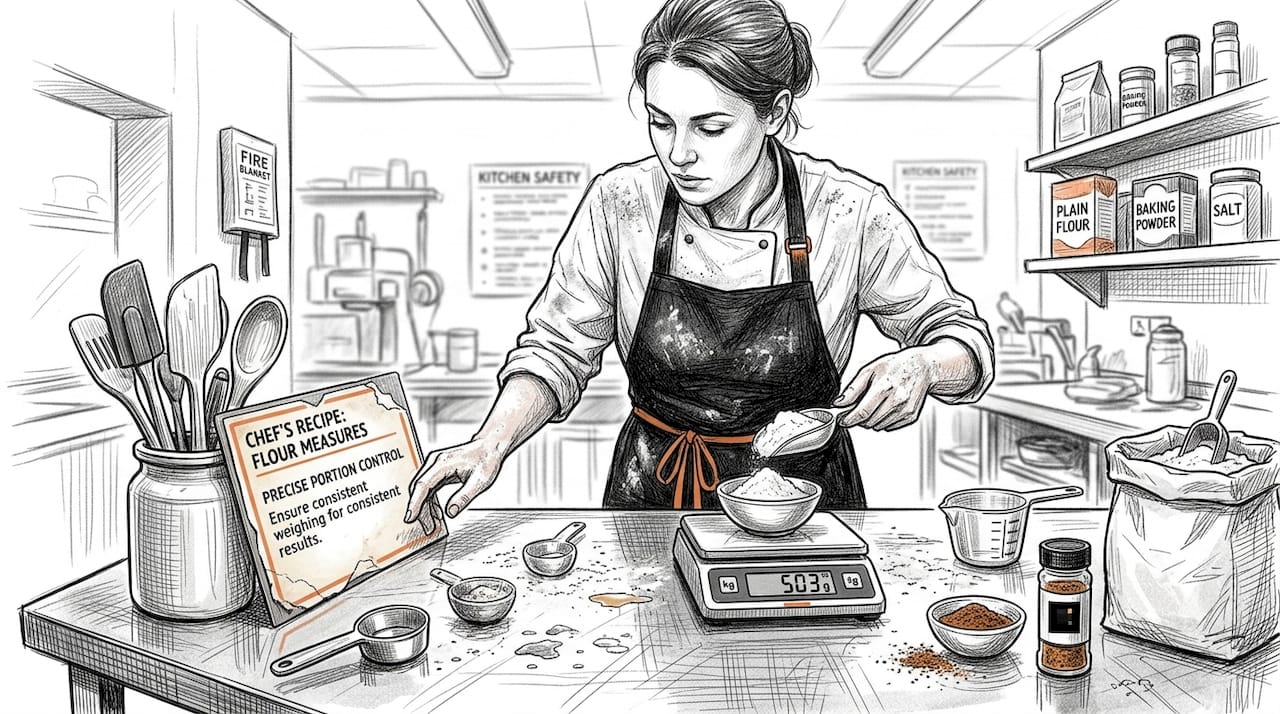
Develop detailed recipe cards for every menu item. Include precise measurements for each ingredient, cooking temperatures, plating instructions, and expected yield. Photograph the finished dish so staff can replicate presentation consistently. Store these recipes digitally where your entire team can access them easily, and update them whenever you modify dishes or switch suppliers.
Portion control requires both training and tools. Invest in scales, measuring cups, portion scoops, and ladles marked with specific volumes. Train your kitchen staff to use these tools religiously, explaining how consistent portions protect profitability whilst maintaining the quality customers expect. Make portion adherence part of your quality control checks during service.
Standardisation delivers multiple benefits beyond cost control. It simplifies forecasting because you know exactly how many portions each ingredient yields. It reduces waste by eliminating guesswork and over-portioning. It maintains quality consistency that builds customer loyalty. Most importantly, it creates accountability because you can quickly identify when costs deviate from expectations.
Implementing standardisation requires these steps:
- Document current recipes by observing your best cooks and recording their techniques
- Test recipes multiple times to verify yields and adjust measurements for accuracy
- Create visual guides with photos showing proper portions and plating
- Train all kitchen staff on new standards with hands-on practice sessions
- Conduct regular spot checks during service to ensure compliance
- Review and update recipes quarterly as suppliers or techniques change
Your restaurant cost control workflow becomes far more effective when built on this foundation of consistency.
Weekly food cost calculation and menu engineering
Establishing your baseline and standardising operations sets the stage for ongoing monitoring. Calculating weekly food costs provides the timely insights you need to spot problems before they seriously damage profitability. This practice transforms cost control from reactive firefighting into proactive management.
Calculate your weekly food cost percentage using this formula: (Cost of Goods Sold ÷ Food Sales) × 100. Your COGS equals beginning inventory plus purchases minus ending inventory for the week. Track this metric consistently and investigate any week where it varies significantly from your target. A sudden spike might indicate waste, theft, pricing errors, or menu mix changes that require attention.
Weekly tracking reveals patterns you would miss with monthly reviews. You might discover that costs spike on weekends when your less experienced team works, or that certain suppliers consistently deliver short weights. These insights enable targeted interventions that quickly improve margins.
Menu engineering takes this analysis further by evaluating each dish's profitability and popularity. Categorise menu items into four groups: stars (high profit, high popularity), ploughhorses (low profit, high popularity), puzzles (high profit, low popularity), and dogs (low profit, low popularity). Focus your menu on stars whilst considering whether to reprice ploughhorses, promote puzzles, or eliminate dogs entirely.
The table below shows typical food cost percentages and resulting net margins for UK full-service restaurants:
| Food Cost % | Gross Margin % | Typical Net Margin % |
|---|---|---|
| 28-32% | 68-72% | 3-5% |
| 33-35% | 65-67% | 2-4% |
| 36-40% | 60-64% | 1-3% |
| 41%+ | <60% | Often unprofitable |
These figures demonstrate why controlling food costs matters so much. UK restaurant net margins average just 3-5%, leaving little room for error. Every percentage point you save on food costs flows almost directly to your bottom line.
Pro Tip: Leverage automation tools to reduce food costs by approximately 3% through precise monitoring and timely pricing adjustments. The data you collect weekly becomes exponentially more valuable when technology helps you act on it immediately rather than discovering problems weeks later.
Leveraging technology: price alerts and prime cost monitoring
Modern technology transforms food cost control from a tedious administrative burden into a strategic advantage. Implementing price alerts and inventory technology completes your checklist by automating the monitoring that protects your margins whilst freeing your time for other priorities.
Price alert systems notify you immediately when supplier costs change, allowing you to renegotiate, switch suppliers, or adjust menu prices before the increase impacts profitability. Automated inventory tracking eliminates manual counting errors whilst providing real-time visibility into stock levels, usage patterns, and reorder points. Integration with your POS system connects purchasing data with sales data, calculating actual food costs automatically.
These tools deliver substantial benefits. Automation can reduce food costs by approximately 3% by catching variances early, preventing waste, and optimising purchasing decisions. They also save countless hours previously spent on spreadsheets and manual calculations, allowing you to focus on cooking great food and serving customers.
Prime cost monitoring represents the pinnacle of cost control. Your prime cost combines food costs and labour costs, typically representing 60-65% of revenue for well-run restaurants. Monitoring this metric weekly reveals the true health of your operation because it captures your two largest expense categories. Technology platforms that track prime cost automatically help you maintain the tight control necessary for sustainable profitability.
When evaluating technology solutions, prioritise these features:
- Automated invoice processing that extracts data from photos, PDFs, or forwarded emails
- Real-time dashboards showing food cost percentage, gross profit, and spending by category
- Mobile access so you can monitor costs anywhere, anytime
- Integration with existing payment and accounting systems
- Price change alerts that notify you of supplier increases immediately
- Inventory tracking with variance reporting to identify waste or theft
- Team access features allowing managers to review data without full administrative rights
The comparison table below evaluates popular solutions for independent UK restaurants:
| Feature | Traditional Spreadsheets | Basic Inventory Software | Comprehensive Platforms |
|---|---|---|---|
| Invoice automation | Manual entry | Limited | Fully automated |
| Real-time insights | No | Partial | Yes |
| Mobile access | Limited | Sometimes | Standard |
| Price alerts | No | Rarely | Yes |
| Integration capability | None | Limited | Extensive |
| Learning curve | Moderate | Moderate | Low |
| Monthly cost | Free | £30-80 | £50-150 |
Choose solutions designed specifically for hospitality rather than generic business software. Restaurant-focused platforms understand your workflows, terminology, and reporting needs. They deliver relevant insights without requiring you to become a software expert.
Pro Tip: Prioritise solutions offering real-time data synchronisation and mobile access for managers on the move. Your restaurant cost control technology should work around your schedule, not the other way around.
Discover technology to simplify your food cost control
Implementing this comprehensive checklist becomes significantly easier with the right technology partner. Kosts is a food cost control platform built specifically for independent UK restaurants by someone who understands your challenges firsthand. The platform automates invoice tracking through simple photo uploads, PDF imports, or email forwarding, then uses AI to extract supplier, item, and cost data instantly.
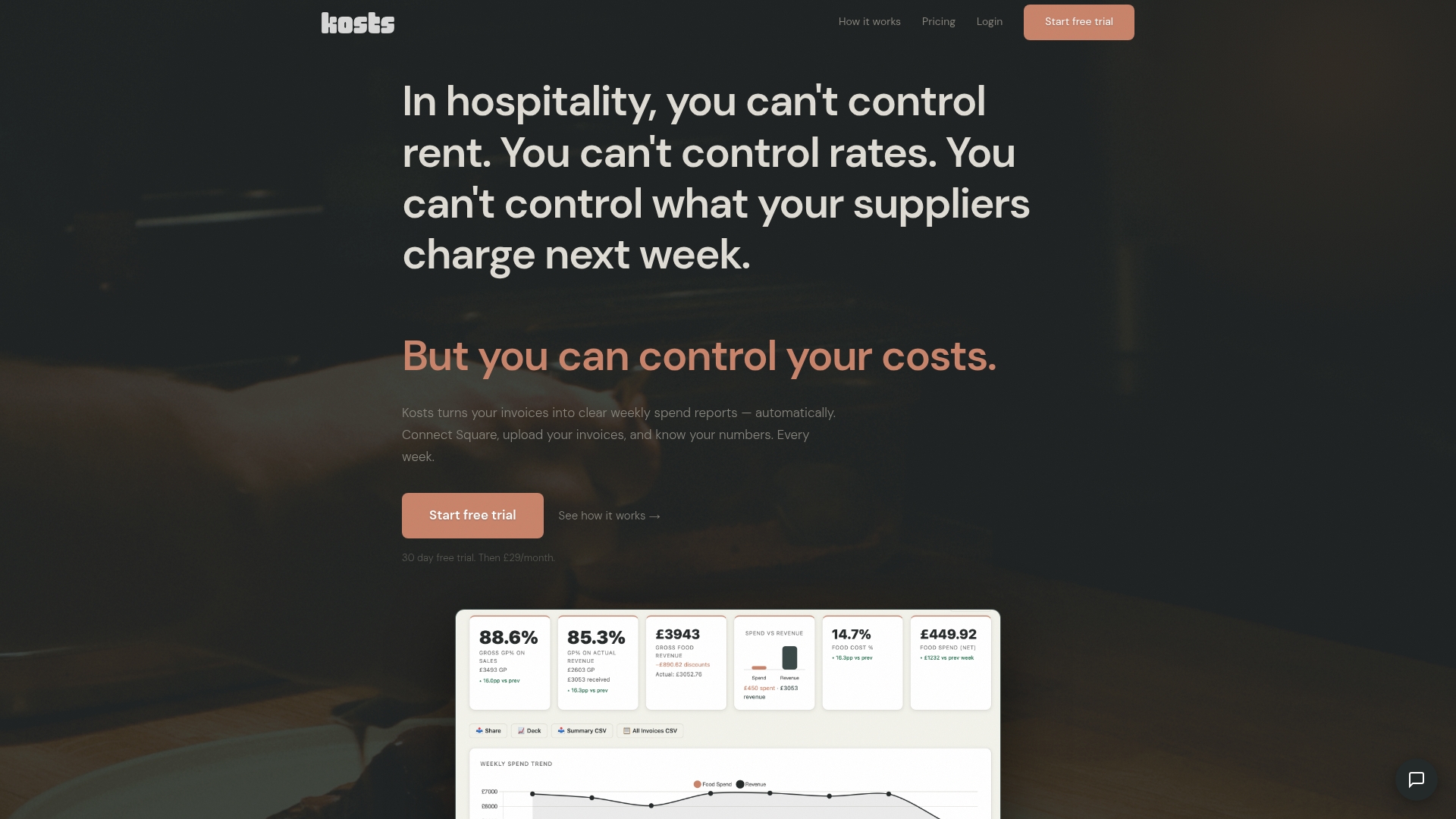
Kosts integrates seamlessly with Square and Xero, automatically importing revenue and synchronising financial data so you always see complete, accurate cost information. The intuitive dashboard displays food cost percentage, gross profit, and expenditure breakdowns by supplier and category on weekly, monthly, or quarterly timescales. You can implement every step of this checklist efficiently whilst saving hours previously spent on manual data entry and calculations. The platform offers a 30-day free trial with straightforward monthly pricing afterwards, making professional cost control accessible without enterprise software complexity. Explore how Kosts can help you master your restaurant cost control workflow and protect your hard-earned margins.
Frequently asked questions
What is a food cost control checklist and why is it important?
A food cost control checklist provides a structured set of steps to systematically manage and reduce food expenses in your restaurant. It helps you track performance consistently, identify cost-saving opportunities, and make smarter purchasing decisions based on data rather than guesswork. For independent UK restaurants operating on tight margins, following a comprehensive checklist can mean the difference between profitability and struggling to stay afloat. The systematic approach ensures nothing falls through the cracks whilst building habits that protect margins long-term.
How can recipe standardisation impact my food costs?
Standardised recipes ensure consistent ingredient use across all service periods, eliminating the waste and cost variations that occur when different team members prepare dishes differently. They support accurate menu pricing because you know exactly what each dish costs to produce, allowing you to set prices that protect your target margins. Standardisation also simplifies inventory forecasting and reduces training time for new staff members who can follow clear, documented procedures.
What technology solutions can help with food cost control?
Inventory management software, automated invoice processing platforms, and price alert systems transform cost control from manual drudgery into strategic advantage. Mobile applications offering real-time cost insights and integration with POS systems connect purchasing data with sales data automatically. Solutions that simplify record keeping reduce manual errors whilst saving countless hours previously spent on spreadsheets. Look for restaurant cost control technology designed specifically for hospitality rather than generic business software to ensure relevant features and intuitive workflows.
How often should I review my food cost controls?
Weekly reviews of actual food costs and inventory provide the frequency needed to catch issues promptly before they compound into serious problems. Calculate your food cost percentage every week and investigate any significant variances immediately. Supplement weekly monitoring with monthly deep-dive analyses that examine supplier pricing trends, menu mix changes, and seasonal patterns affecting your costs. Quarterly reviews should assess whether your target food cost percentage remains appropriate given current market conditions and menu composition.