
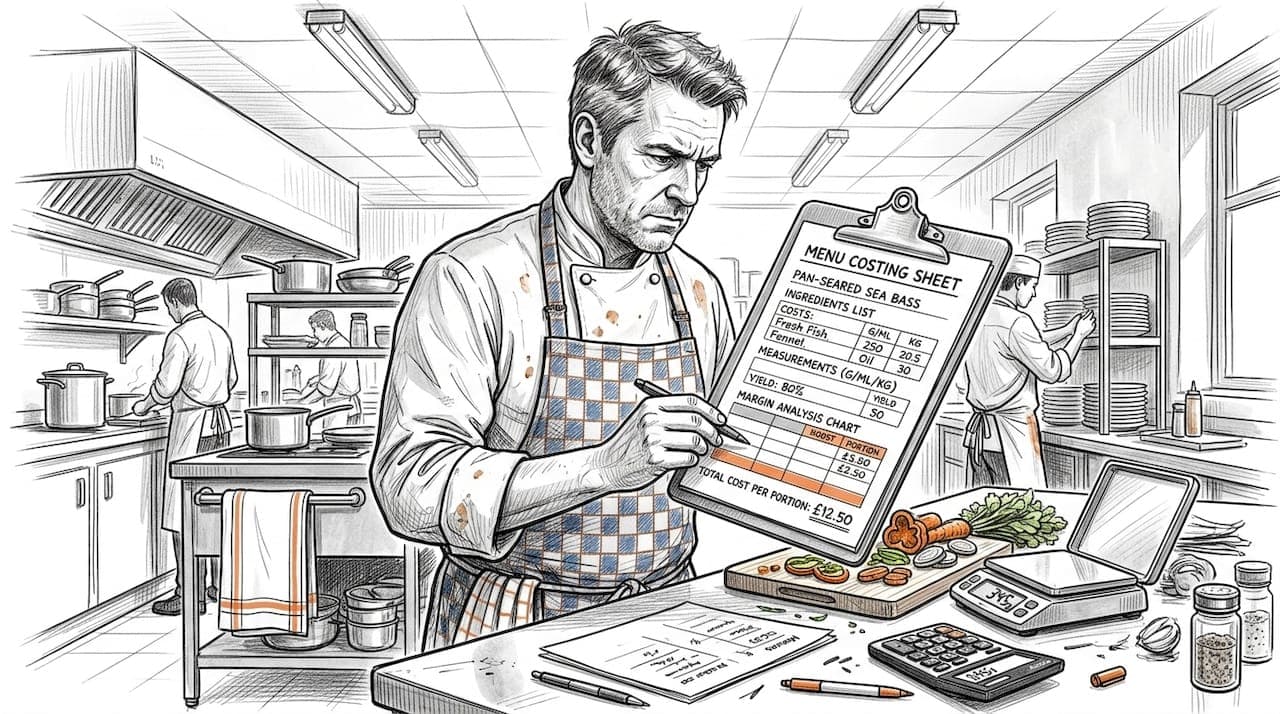
Managing food costs remains one of the toughest challenges for independent UK restaurant owners. Rising supplier prices, inconsistent portioning, and inventory waste can quietly erode your profit margins. Yet choosing the right food cost controls doesn't have to be overwhelming. This guide presents practical examples of cost control methods, organised by clear evaluation criteria, so you can identify which techniques fit your kitchen's scale, budget, and operational style. You'll discover actionable strategies to reduce waste, standardise costs, and boost profitability.
Table of Contents
- Key Takeaways
- Criteria for effective food cost controls
- Examples of food cost controls
- Comparison of popular food cost control methods
- Choosing the right food cost controls for your restaurant
- Boost your restaurant's food cost control with Kosts
- Frequently asked questions
Key Takeaways
| Point | Details |
|---|---|
| Balanced evaluation criteria | Choose cost controls that prioritise accuracy, ease of use, cost overhead and scalability to fit your kitchen. |
| Portion control foundation | Calibrated portioning with precise measurements prevents over serving and waste. |
| Standardisation boosts consistency | Standardising recipes supports consistency and simplifies forecasting for inventory needs. |
| Inventory tracking reduces waste | Regular stock checks and digital alerts help spot variances and avoid losses. |
Criteria for effective food cost controls
Before implementing any food cost control method, you need a framework to evaluate whether it suits your restaurant. The most successful controls share four core attributes: accuracy, ease of use, cost overhead, and scalability. Accuracy ensures your measurements reflect true ingredient usage and waste. Ease of use determines whether your team will consistently apply the method during busy service periods. Cost overhead covers both initial setup expenses and ongoing maintenance. Scalability means the control can grow with your business without requiring a complete overhaul.
When selecting controls, prioritise methods that integrate seamlessly into your daily operations. A restaurant cost control workflow that disrupts service or demands excessive paperwork will fail regardless of its theoretical benefits. Digital tools can enhance all four criteria, but only if they're intuitive and align with your staff's technical comfort level. Evaluate each potential control against these standards:
- Does it provide reliable data you can act on?
- Can your team implement it without extensive training?
- Will the cost savings justify the investment?
- Can it adapt as your menu or volume changes?
These questions help you avoid controls that look impressive on paper but prove impractical in a working kitchen. The best food cost controls feel invisible because they become part of your routine rather than an additional burden.
Examples of food cost controls
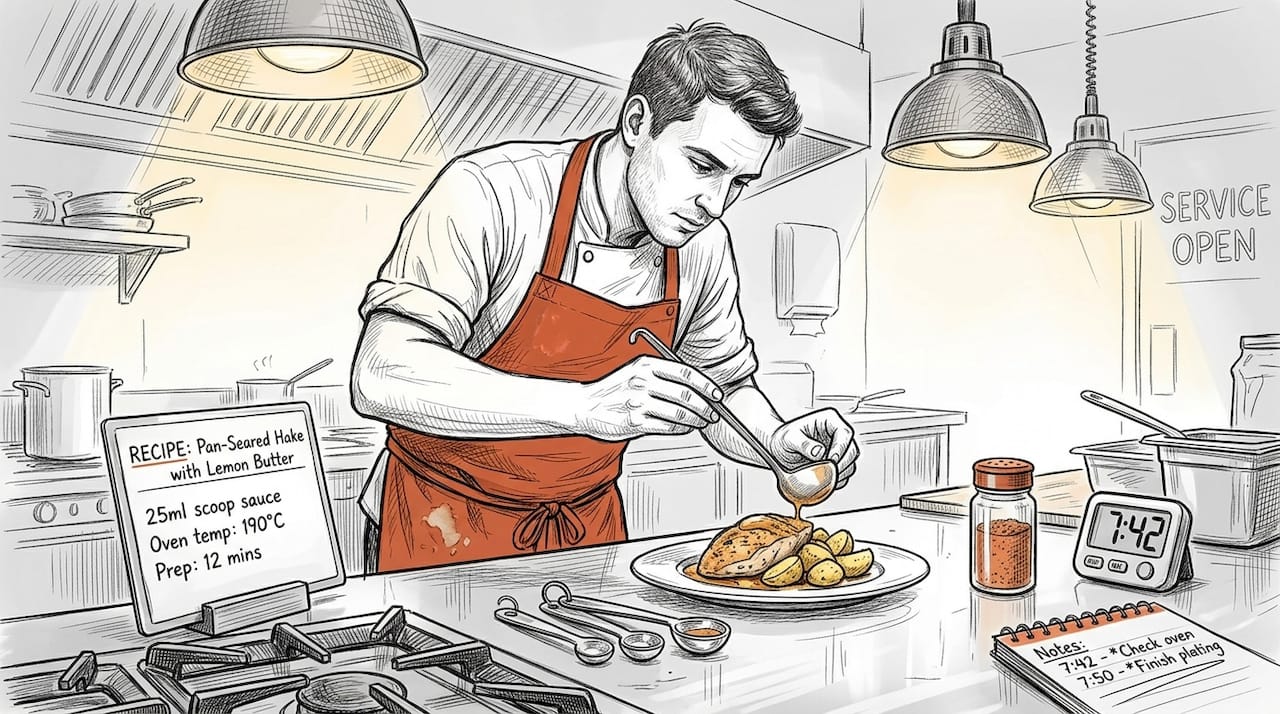
Successful restaurants combine multiple food cost control techniques to create a comprehensive system. Portion control stands as the foundation. Use calibrated scoops, ladles, and scales to ensure every plate receives the exact ingredient quantity specified in your recipes. Train staff to measure rather than estimate, especially for expensive proteins and garnishes. This simple practice prevents the gradual portion creep that inflates costs by 15 to 20 percent over time.
Recipe standardisation works hand in hand with portion control. Document every dish with precise measurements, cooking methods, and plating instructions. When your team follows standardised recipes, you eliminate the variance that occurs when different cooks interpret dishes differently. This consistency also simplifies inventory forecasting because you know exactly how much of each ingredient a single service requires.
Inventory tracking catches waste, theft, and ordering errors before they damage your bottom line. Conduct regular stock counts, comparing physical inventory against your purchasing records and recipe usage calculations. Discrepancies reveal problem areas. Digital inventory systems automate much of this process, flagging unusual patterns and generating reorder alerts based on your actual consumption rates.
Supplier price monitoring ensures you're getting competitive rates. Review invoices weekly, tracking price changes for your most-used ingredients. When costs spike, contact alternative suppliers or negotiate with your current vendor. Many restaurant owners discover they've been overpaying simply because they haven't questioned pricing in months. Set calendar reminders to research market rates quarterly.
- Portion control: reduces over-serving, requires minimal investment in measuring tools
- Recipe standardisation: ensures consistency, simplifies training and forecasting
- Inventory tracking: identifies waste and theft, may require dedicated staff time
- Supplier monitoring: uncovers savings opportunities, demands regular invoice review
Comparison of popular food cost control methods
Different control methods suit different restaurant types and budgets. This comparison helps you match techniques to your specific situation.
| Method | Accuracy | Ease of use | Implementation cost | Scalability | Ideal for |
|---|---|---|---|---|---|
| Portion control | High | High | Low (£50-200 for tools) | High | All restaurant sizes |
| Recipe standardisation | High | Medium | Low (time investment) | High | All restaurant sizes |
| Manual inventory tracking | Medium | Low | Very low | Low | Small operations |
| Digital inventory systems | Very high | High | Medium (£30-150/month) | Very high | Growing restaurants |
| Supplier negotiations | Medium | Medium | Low (time only) | Medium | All restaurant sizes |
| Automated invoice tracking | Very high | Very high | Medium (£40-120/month) | High | Tech-comfortable operators |
Pro Tip: If you're just starting with food cost controls, begin with portion control and recipe standardisation. These deliver immediate savings with minimal investment, building momentum for more sophisticated methods later.
Notice how digital food cost control tools score highest on accuracy and ease of use. The monthly subscription cost pays for itself when you consider the staff hours saved on manual calculations and the waste reduction from better visibility. However, manual methods remain perfectly viable for smaller operations with limited budgets and stable menus.
Choosing the right food cost controls for your restaurant
Your restaurant's size, budget, and team experience should guide your selection of food cost management strategies. Small independent restaurants with one or two cooks can achieve excellent results with portion control, standardised recipes, and weekly manual inventory counts. These methods require minimal financial investment and can be managed by the owner or head chef without additional software.
Larger restaurants with multiple staff members and complex menus benefit enormously from digital solutions. When you're managing dozens of suppliers, hundreds of ingredients, and varying prep teams, manual tracking becomes unreliable and time-consuming. Integrated systems that connect your invoices, inventory, and sales data provide the comprehensive visibility needed to spot problems quickly and make informed purchasing decisions.
Regardless of which controls you implement, ongoing staff training remains essential. Schedule monthly refresher sessions on proper measuring techniques and recipe adherence. Review your food cost percentage weekly, investigating any unexpected increases immediately rather than waiting for month-end reports. This proactive approach catches issues whilst they're still small and correctable.
Consider these factors when building your food cost control system:
- Start with one or two methods and master them before adding complexity
- Choose controls that your team will actually use during service pressure
- Budget for both setup costs and ongoing maintenance or subscription fees
- Plan regular reviews to assess whether controls are delivering expected savings
- Adjust methods as your restaurant grows or your menu changes
The most effective approach combines simple physical controls with strategic use of technology. You don't need to automate everything, but you should automate the tasks that consume excessive staff time or introduce frequent errors.
Boost your restaurant's food cost control with Kosts
Implementing the food cost controls discussed above becomes significantly easier with the right digital support. Kosts transforms how UK restaurant owners monitor and manage their operating costs by automating the tedious parts of cost tracking whilst keeping you in control of strategic decisions.
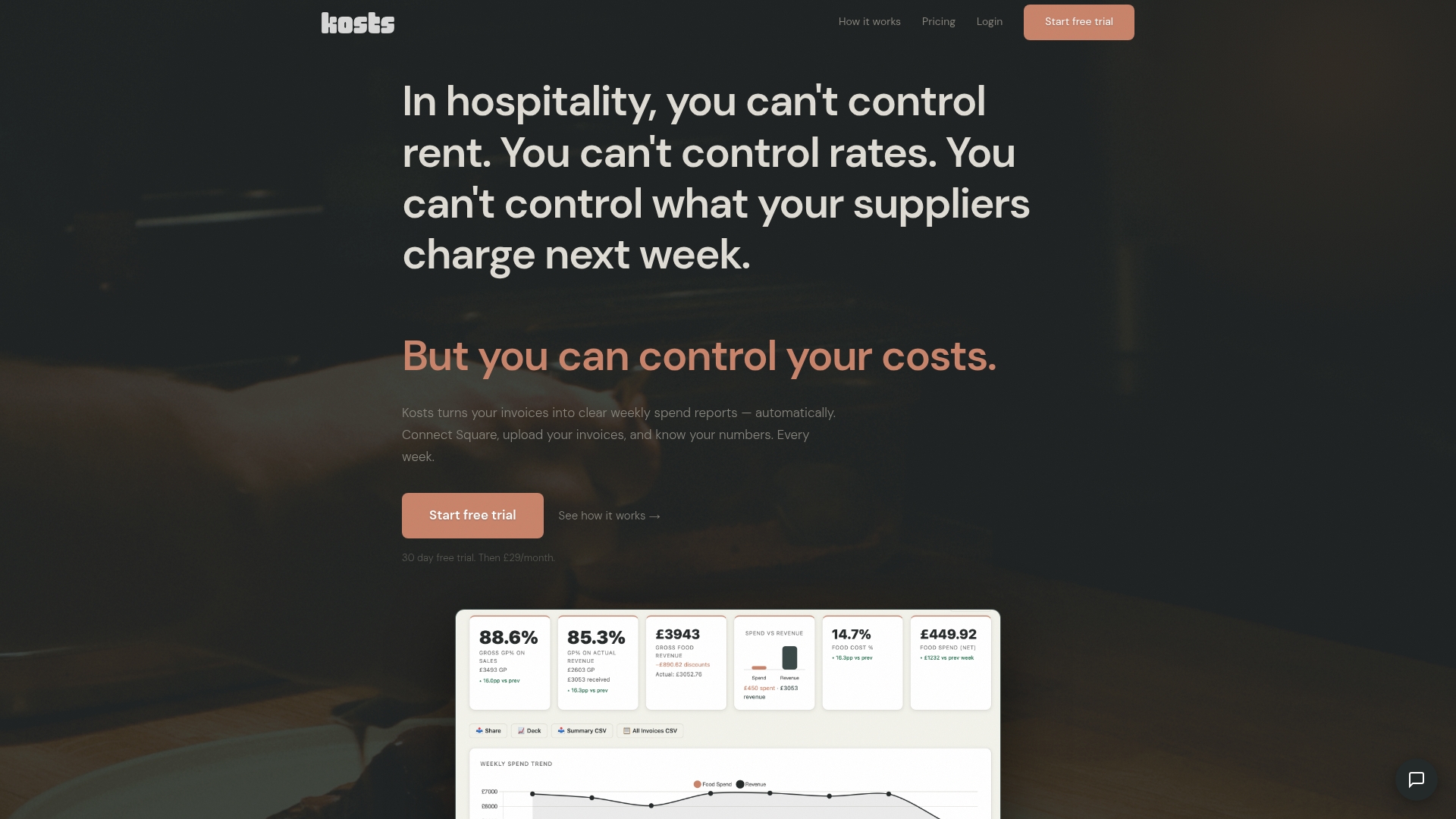
Upload your supplier invoices via photo, PDF, or email forwarding, and Kosts automatically extracts every item, price, and category through AI-powered scanning. The platform integrates with Square and Xero, importing your revenue data and synchronising financial records without manual data entry. Your dashboard displays food cost percentage, gross profit, and spending breakdowns by supplier and category on weekly, monthly, or quarterly timeframes. Built by a working chef who understands real kitchen challenges, Kosts emphasises simplicity and practical features like team access and report exports. Start your 30-day free trial at Kosts and experience how straightforward food cost control can be.
Frequently asked questions
What are food cost controls?
Food cost controls are systematic methods restaurant owners use to monitor, measure, and manage ingredient expenses. These techniques ensure consistent portioning, reduce waste, track inventory accurately, and identify cost-saving opportunities. Effective controls provide the data needed to maintain target food cost percentages whilst protecting profit margins.
How can portion control reduce food costs?
Portion control prevents over-serving, which directly cuts ingredient waste and expense. When staff use calibrated measuring tools rather than estimating, every plate receives the precise amount specified in your recipe. This consistency eliminates the gradual portion increases that can inflate costs by 15 to 20 percent without anyone noticing.
What role do digital tools play in food cost control?
Digital tools automate time-consuming tasks like invoice data entry, inventory calculations, and cost reporting. This automation reduces human error whilst providing real-time visibility into your spending patterns. Restaurant cost control workflow systems free your team to focus on cooking and service rather than spreadsheets, and they flag unusual cost spikes immediately so you can investigate and respond quickly.
Which food cost control method suits small restaurants best?
Small restaurants achieve excellent results with portion control using measuring tools and standardised recipe documentation. These methods require minimal financial investment, typically under £200 for quality scales and measuring equipment. As your budget allows, consider affordable digital invoice tracking to automate supplier cost monitoring and save hours on manual calculations each week.