

TL;DR:
- Proper restaurant accounting provides essential insights into profitability and cash flow management.
- Consistent habits and clear ownership are crucial for effective financial control in UK restaurants.
- Tracking prime cost and food cost percentage weekly helps prevent small issues from becoming costly problems.
Most UK restaurant owners treat accounting as something you hand off to a bookkeeper once a year and forget about until tax season. That's an expensive mistake. Solid food service accounting isn't a compliance chore — it's the clearest window you have into where your money is going, which dishes are actually profitable, and whether your business will survive a quiet January. This guide covers the core concepts, essential terms, and practical routines that independent operators need to take genuine control of their finances. No jargon overload, no accountancy degree required — just the knowledge you need to run a tighter, more profitable kitchen.
Table of Contents
- Why accounting is crucial for UK food service businesses
- Essential food service accounting terms you must know
- The building blocks: Core food service accounting processes
- Practical ways to use your numbers to save money
- What most guides miss about food service accounts
- Move from basics to effortless accounting
- Frequently asked questions
Key Takeaways
| Point | Details |
|---|---|
| Accounting unlocks profits | Basic financial tracking is the foundation for better cost control and long-term restaurant success. |
| Know your numbers | Understanding key terms and routines enables smarter decisions and less waste. |
| Turn data into action | Use core accounting insights to tweak menus, manage inventory, and lift your margins. |
| Consistency trumps complexity | Sticking with simple, regular accounting processes beats hunting for the perfect software every time. |
Why accounting is crucial for UK food service businesses
There's a stubborn myth in hospitality that good food and a full dining room are enough to keep a restaurant healthy. They're not. Restaurants operate on notoriously thin margins, often between 3% and 9% net profit, and even small cost overruns can tip a busy site into loss. Accounting is what tells you when that's happening — before it's too late.
UK food businesses face a specific set of pressures that make this even more important. Seasonality creates wildly uneven cash flow across the year. Rising ingredient costs, energy bills, and National Living Wage increases squeeze margins from multiple directions at once. VAT thresholds, Making Tax Digital obligations, and payroll compliance add layers of regulatory complexity that catch unprepared owners off guard.
Here's what poor accounting actually looks like in practice:
- Ordering too much stock because you're guessing rather than tracking
- Missing a VAT payment because cash flow wasn't planned properly
- Keeping a loss-making dish on the menu because you never calculated its true cost
- Paying suppliers late and damaging relationships that affect your terms
- Not knowing your busiest and quietest periods well enough to staff correctly
As accounting tips for smarter finances make clear, accurate financial data is essential for controlling inventory and food costs in restaurants. Without it, you're making decisions based on gut feeling rather than evidence.
"The numbers don't lie — but they do stay silent if you never look at them. Reviewing your figures weekly is the single habit that separates owners who thrive from those who are always firefighting."
Proper accounting gives you the power to spot problems early, make confident purchasing decisions, and negotiate from a position of knowledge rather than hope.
Essential food service accounting terms you must know
Before you can use your numbers, you need to understand what they're telling you. Here are the key terms every UK restaurant operator should have in their vocabulary.
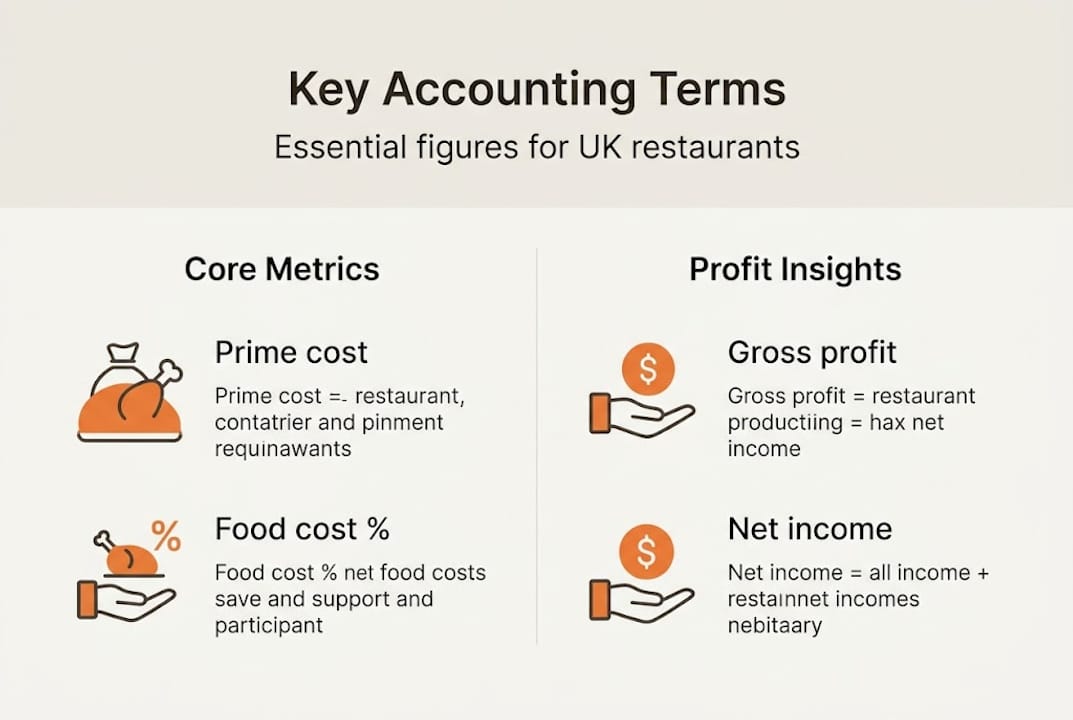
| Term | What it means | Why it matters |
|---|---|---|
| Gross profit | Revenue minus the cost of goods sold | Shows how much you make before overheads |
| Net profit | What remains after all costs, including wages and rent | Your true bottom line |
| Prime cost | Food and beverage costs plus labour costs combined | The single most important number in your business |
| Food cost % | Food spend divided by food revenue, expressed as a percentage | Tells you if your menu is priced correctly |
| COGS | Cost of goods sold — the direct cost of ingredients used | Tracks ingredient spend against sales |
| Cash flow | The movement of money in and out of your business | Prevents running out of cash even when profitable |
| Break-even point | The revenue level where you cover all costs exactly | Helps you understand your minimum viable trading week |
| Accounts payable | Money you owe to suppliers | Affects supplier relationships and cash position |
Controlling food and beverage inventory costs is a cornerstone of restaurant financial management, and understanding these terms is the first step toward doing that well. If you want to go deeper, the food cost control checklist for UK restaurants is a practical companion to this glossary.
Pro Tip: Print this table and stick it somewhere visible in your office. When your bookkeeper or accountant mentions any of these terms, you'll follow the conversation and ask better questions — which always leads to better decisions.
Don't try to memorise everything at once. Focus first on prime cost and food cost percentage, as these two figures give you the fastest read on whether your restaurant is heading in the right direction.
The building blocks: Core food service accounting processes
Knowing the language is only useful if you put it to work. These are the core routines that structured, well-run UK restaurants follow consistently.
-
Track daily sales and covers. Record total revenue, number of covers, and average spend per head every single day. This creates the baseline against which every cost is measured. Use your EPOS system's end-of-day report as your starting point.
-
Calculate your food cost percentage weekly. Take your total ingredient spend for the week, divide it by your total food revenue, and multiply by 100. A figure above 35% in most restaurant formats is a warning sign worth investigating immediately.
-
Record all invoices as they arrive. Don't let paperwork pile up. Log every supplier invoice the day it lands, noting the supplier, category, and amount. This keeps your accounts payable accurate and prevents nasty surprises.
-
Run payroll accurately and on time. Labour is typically your largest single cost. Track scheduled versus actual hours, account for National Living Wage rates, and reconcile payroll against your prime cost target every week. Common mistakes include not accounting for holiday pay accrual and misclassifying workers.
-
Review a monthly profit and loss statement. This is your scorecard. Revenue at the top, costs broken down below, net profit at the bottom. Review it within the first week of the following month while the period is still fresh.
-
Monitor cash flow separately from profit. A restaurant can be technically profitable and still run out of cash. Map your expected income and outgoings two to four weeks ahead at all times.
Prime cost reporting shows that effective prime cost management of 55 to 65% is a crucial benchmark for profitability in UK restaurants. If your combined food and labour costs exceed 65% of revenue, you need to act quickly. Pairing this with solid expense tracking solutions makes the whole process far less painful.
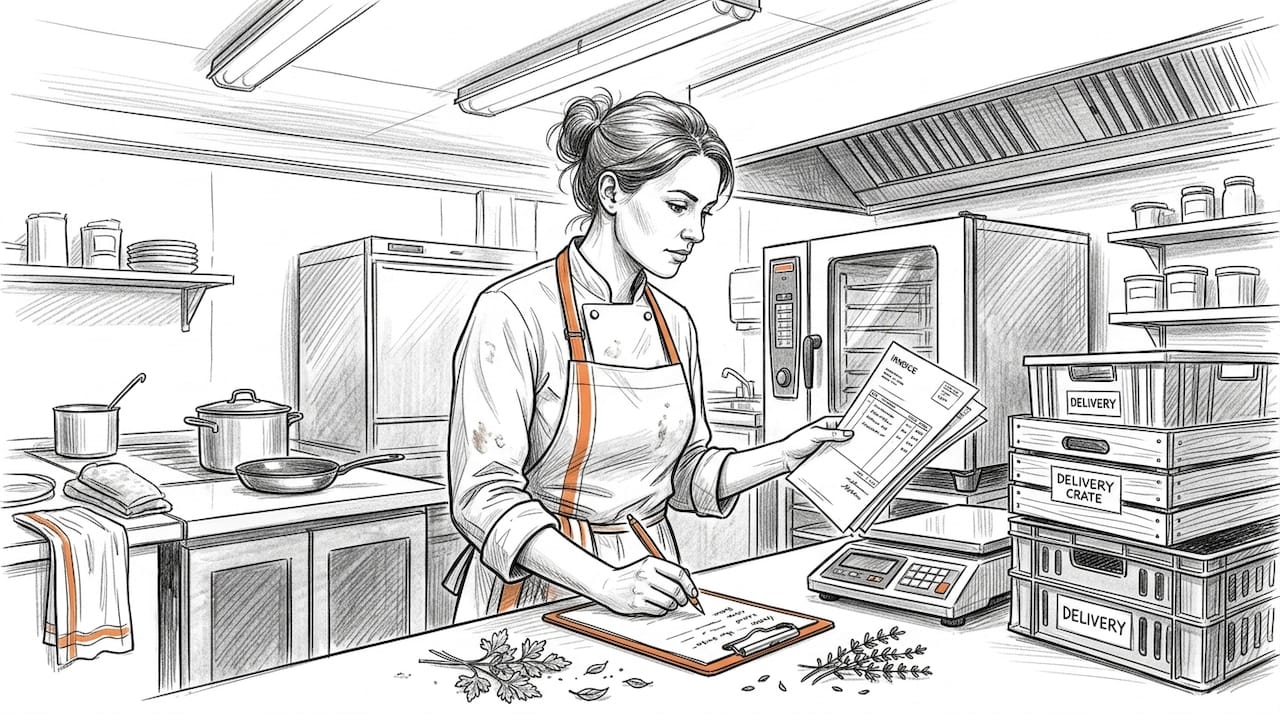
Pro Tip: Set a recurring 30-minute slot every Monday morning to review last week's food cost percentage and prime cost. This one habit, done consistently, will surface problems faster than any software alone.
Practical ways to use your numbers to save money
Data is only valuable when it drives action. Here's how to turn your accounting basics into real savings.
Intuitive decisions vs data-driven decisions
| Situation | Intuitive approach | Data-driven approach |
|---|---|---|
| Ordering stock | Order what feels low | Order based on sales data and par levels |
| Menu changes | Remove dishes that feel slow | Remove dishes with high food cost % and low margin |
| Staffing | Schedule based on habit | Schedule based on covers data by day and session |
| Supplier negotiations | Accept quoted prices | Use spend data to negotiate volume discounts |
| Waste reduction | Remind staff to be careful | Track waste by category and adjust order quantities |
Systematic food cost tracking can significantly boost restaurant profit margins, and the comparison above shows exactly why. Gut instinct is useful — but it can't compete with a clear weekly spend report.
Here are practical steps UK restaurant owners can take right now:
- Compare your food cost percentage this week against the same week last year
- Identify your three highest-cost ingredients and review whether they appear in your highest-margin dishes
- Use your sales mix data to spot which menu items are ordered most and which are ordered rarely
- Review supplier invoices for price creep — small increases per unit add up significantly over a quarter
- Check your food cost control examples to see how similar operators have reduced costs without compromising quality
- Build a simple cost control workflow so that these checks happen automatically, not just when things go wrong
The goal isn't perfection. It's consistent visibility. When you can see your numbers clearly each week, small problems get caught before they become big ones.
What most guides miss about food service accounts
Most accounting guides for restaurants focus almost entirely on the mechanics — which software to use, how to categorise expenses, what reports to run. That's all useful, but it misses the most common reason independent operators struggle with their finances: inconsistent habits and unclear ownership.
We've seen it repeatedly. An owner invests in a new accounting platform, spends a weekend setting it up, and then stops reviewing it after three weeks because service gets busy. The tool was fine. The habit wasn't there.
The real unlock isn't software. It's deciding who reviews what, and when. Even a simple shared spreadsheet reviewed every Monday is more powerful than an enterprise system nobody opens. Clear delegation matters too — if your head chef knows they're accountable for food cost percentage each week, behaviour changes at the ordering stage.
Another thing most guides skip: the emotional side of looking at your numbers. Many owners avoid their accounts because they're afraid of what they'll find. That avoidance is always more costly than the problem itself. Building a habit of calm, regular review — even when trading is tough — is the skill that separates resilient operators from those who are always reacting.
For a broader look at how this mindset applies day-to-day, the expense management advice on managing restaurant expenses is worth reading alongside this guide. Consistency and clear eyes always beat chasing the next shiny tool.
Move from basics to effortless accounting
Mastering the fundamentals is genuinely transformative for independent restaurants. Once you understand your prime cost, track your food cost percentage weekly, and review a monthly profit and loss statement, you're already ahead of most operators in the UK.
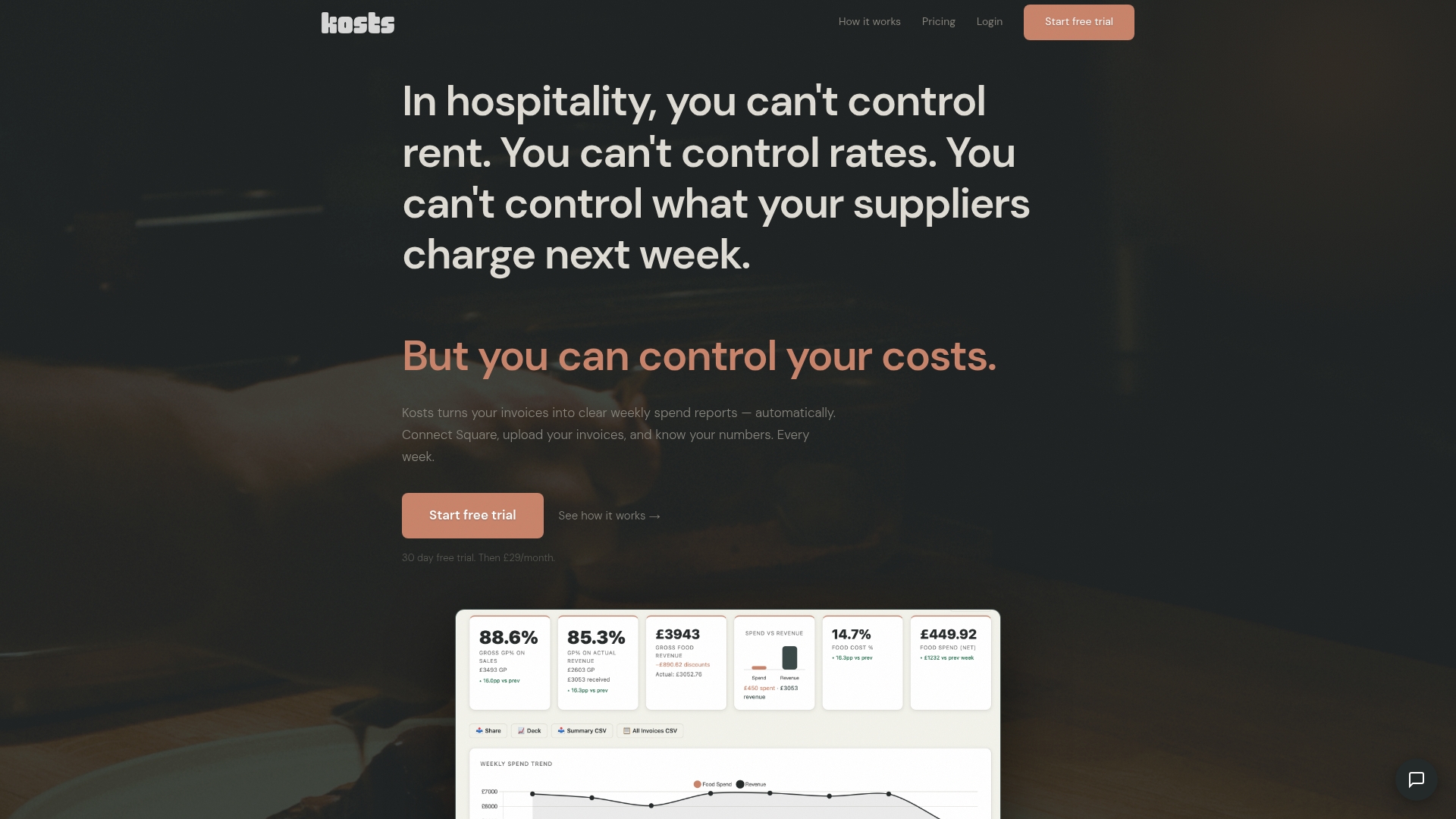
The next step is making those habits sustainable without consuming your entire week. That's exactly what Kosts is built for. Designed by a working chef who understood the real pressures of running a kitchen, Kosts converts your invoices into automated weekly spend reports — giving you clear, actionable visibility into your costs without the manual effort. Upload invoices by photo, PDF, or email, and let the platform do the heavy lifting. Start your 30-day free trial and see how much clearer your numbers can be.
Frequently asked questions
What are the most important accounting documents for a UK restaurant?
Key documents include daily sales reports, cost of goods sold statements, payroll logs, and monthly profit and loss statements. Regular cost reports and clear accounting records underpin sound financial management for any food service business.
How can accounting help reduce food waste in my restaurant?
Tracking inventory and analysing food cost data pinpoints exactly where waste is occurring, allowing you to adjust purchasing quantities and refine menu items accordingly. Systematic food cost tracking can boost savings and reduce waste simultaneously.
Do I need an accountant, or can I manage basic restaurant accounting myself?
Small and newer operators can handle the day-to-day basics with the right systems in place, but a qualified accountant adds real value for tax planning, VAT compliance, and more complex financial issues. Owners can manage basics but benefit from professional support as the business grows in complexity.
Which costs should UK restaurant owners track most closely?
Food and beverage inventory, labour (payroll), and fixed operating expenses are the primary drivers of restaurant profitability and should be monitored weekly. Inventory and payroll consistently account for the largest share of costs in UK food service businesses.