
TL;DR:
- Many independent restaurants lose profit due to hidden costs like supplier price increases and waste.
- Modern cost management tools offer real-time visibility, automation, and actionable insights.
- Choosing targeted automation solutions tailored for small restaurants maximizes ROI and improves profit margins.
Many independent restaurants lose a significant slice of their profit each year not to bad food or poor service, but to costs they simply cannot see. Ingredient prices creep up, supplier invoices stack up, and labour hours blur into a rough estimate. Without clear visibility, every financial decision is a guess. Restaurant management software confirms that untracked or poorly managed costs quietly erode margins that were already thin to begin with. This guide cuts through the noise and gives you a practical, honest look at which cost management tools actually make a difference and how to put them to work in your restaurant.
Table of Contents
- Why cost management is critical for independent restaurants
- What cost management tools can do: Features and real-world impact
- Manual methods vs. enterprise suites vs. targeted automation
- How to choose and implement the right cost management tool
- The missed opportunity: What most restaurant owners get wrong
- Streamline cost control with the right tools
- Frequently asked questions
Key Takeaways
| Point | Details |
|---|---|
| Hidden cost leaks matter | Manual methods mask inefficiencies that shrink restaurant margins. |
| Tools deliver real ROI | Time savings and smarter decisions from cost management tools usually outweigh their fees. |
| Choose automation wisely | Targeted, right-sized tools suit most independents better than enterprise suites. |
| Implementation drives results | Success relies on team buy-in, regular review, and ongoing adjustment, not set-and-forget installs. |
Why cost management is critical for independent restaurants
Running an independent restaurant in the UK means operating on margins that leave very little room for error. Unlike large chains with dedicated finance teams, most independents rely on the owner or a manager to track every cost alongside running the floor, managing staff, and keeping guests happy. That is a lot to hold together.
The core challenge is complexity. You are dealing with fluctuating ingredient prices driven by seasonal availability and supplier decisions, variable labour costs tied to shift patterns and wage legislation, and a wide mix of suppliers each sending invoices in their own format and on their own schedule. Trying to reconcile all of that manually is not just time-consuming. It is genuinely risky.
Understanding why monitoring food costs is vital for UK restaurants is the first step. Food cost is typically one of the largest controllable expenses, yet it is often the least consistently tracked. When prices shift even slightly across multiple ingredients and multiple suppliers, the cumulative impact on your gross profit can be severe.
Here is what manual tracking typically misses:
- Gradual supplier price increases that go unnoticed week to week
- Portion drift and waste that never gets recorded
- Invoicing errors that are paid without question
- Labour overruns on quieter trading days
- Overhead creep across utilities, packaging, and consumables
Manual cost tracking, while appearing low-cost on the surface, often hides inefficiencies that cost far more than any software subscription. A missed price increase of just £0.30 per kilo on a high-volume ingredient, repeated across weekly orders, adds up to hundreds of pounds lost before anyone notices.
Modern cost management tools change this dynamic entirely. They give you a live, structured picture of where your money is going so you can act before a problem becomes a crisis rather than after.
What cost management tools can do: Features and real-world impact
With the challenge clear, it is worth examining what modern tools actually deliver in practice. The best platforms do far more than replace a spreadsheet. They fundamentally change how you interact with your financial data.
Core features to expect from a quality cost management tool include:
- Automated invoice processing that extracts supplier, item, and cost data without manual entry
- Live dashboards showing food cost percentage, gross profit, and spend by category
- Supplier spend analysis revealing which partners are costing you most over time
- Revenue integration that pulls sales data directly from your point-of-sale system
- Exportable reports you can share with your accountant or review with your team
The day-to-day impact is significant. Rather than spending Sunday evening entering invoices into a spreadsheet, you upload a photo or forward an email and the data is ready. Your dashboard updates automatically. You can see at a glance whether your food cost percentage is on target or drifting upward.
| Feature | Manual tracking | Cost management tool |
|---|---|---|
| Invoice processing | Hours per week | Minutes per week |
| Error rate | High | Very low |
| Real-time visibility | None | Continuous |
| Supplier comparison | Rarely done | Automated |
| Report generation | Manual | Instant |
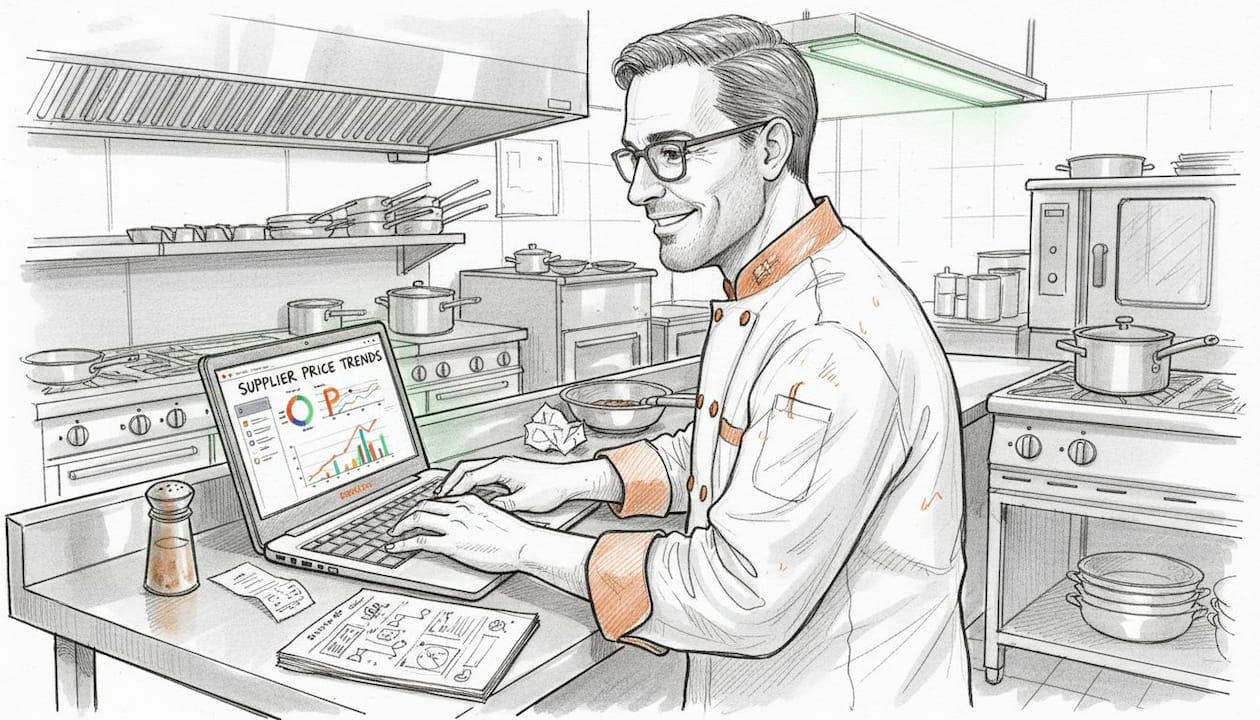
Consider a practical example. A busy independent bistro notices through its dashboard that one supplier's chicken price has increased by 8% over six weeks. Without a tool, this would likely go unnoticed until a quarterly review. With the tool, the owner spots it within days, contacts the supplier, and either negotiates the price back or sources an alternative. That single action could save thousands over a year.
Pro Tip: Use food cost tracking tips to set weekly benchmarks for your key ingredients. Comparing actuals against targets each week is where the real savings begin.
The ROI from cost management tools comes primarily from time savings and margin improvement, not just reduced mistakes. When you reclaim hours each week and make better purchasing decisions, the financial return compounds quickly. Platforms that help you optimise operating costs give you the structure to do this consistently rather than reactively.
Manual methods vs. enterprise suites vs. targeted automation
Not all cost management solutions are created equal, and choosing the wrong type can be just as damaging as using no tool at all. There are broadly three categories worth understanding.
Manual methods such as spreadsheets and paper records seem appealing because they appear free. But the hidden costs are real. Time spent entering data is time not spent on the restaurant. Errors compound. Insights arrive too late to act on. And when a key person leaves, institutional knowledge walks out with them.
Enterprise-level systems are built for large restaurant groups and chains. They offer extensive features covering procurement, HR, scheduling, inventory, and finance in one platform. But as enterprise-level systems like CrunchTime demonstrate, these solutions are often overkill for small restaurants. The pricing reflects their scale, the implementation takes months, and the complexity can overwhelm a small team.
Targeted automation tools sit in the middle and serve most independents best. They focus on the specific problems you actually face, invoice processing, cost visibility, supplier tracking, and revenue comparison, without burying you in features you will never use.
Here is a quick comparison:
| Approach | Cost | Complexity | Insight quality | Best for |
|---|---|---|---|---|
| Manual | Low upfront | Low | Poor | Very early stage |
| Enterprise suite | High | Very high | Excellent | Large groups |
| Targeted tool | Moderate | Low | Very good | Independents |
The right choice for an independent restaurant is almost always a targeted tool. It fits your workflow, delivers meaningful insight quickly, and does not require a dedicated IT resource to maintain. If you want to master expense management without drowning in complexity, this is the category to focus on.
Key qualities to prioritise when comparing targeted tools:
- Simple onboarding with no lengthy setup process
- Invoice capture via photo, PDF, or email
- Clear dashboard with food cost and gross profit metrics
- Integration with your existing POS or accounting software
- Transparent, predictable pricing
How to choose and implement the right cost management tool
Choosing a tool is only half the job. Implementing it well is what determines whether it actually changes your results. Here is a practical approach that works for most independents.
-
Define your priorities. Are you most concerned about food cost, labour overruns, or overall overhead visibility? Knowing your biggest pain point helps you evaluate tools against what matters most to your operation.
-
Shortlist tools that fit your size. Ignore anything marketed primarily at chains or large groups. Look for platforms built specifically for independent operators, ideally by people who understand the realities of running a kitchen.
-
Trial before committing. Most reputable platforms offer a free trial. Use it properly. Upload real invoices, connect your revenue data, and spend time in the dashboard. Does it show you what you need? Is it genuinely easy to use?
-
Train your team incrementally. Avoid switching everything at once. Start with invoice uploading, then introduce dashboard review, then move to weekly reporting. Gradual adoption reduces resistance and builds confidence.
-
Measure before and after. Record your current food cost percentage, the time you spend on admin, and any known problem areas. After 60 days with the new tool, compare. The difference is your ROI.
Pro Tip: Explore smart expense tracking methods before your trial begins. Having a clear sense of what good tracking looks like helps you evaluate any platform more objectively.
Restaurants with modern cost management processes consistently report improved financial visibility and more confident decision-making. A structured cost control checklist used alongside your chosen tool gives you a reliable weekly rhythm that keeps costs in check without consuming your entire day.
The missed opportunity: What most restaurant owners get wrong
Here is something most cost management guides will not tell you. The tool itself is not the solution. How you use it is.
Most owners who invest in a cost management platform do so hoping it will run quietly in the background and surface problems automatically. And it will, to a point. But the real gains come from what you do with the data. Spotting a trend is only valuable if someone acts on it.
The pattern we see repeatedly is owners who focus on the obvious headline numbers, total spend and food cost percentage, while ignoring the deeper layer of insight sitting right there in their dashboard. Supplier-level spending trends, category drift, and waste patterns often hold more actionable information than any top-line figure.
Tracking supplier spending over time, for instance, reveals negotiating opportunities that would never surface from a single invoice. A supplier who has quietly increased prices across six products over three months is a conversation waiting to happen. But only if you are looking.
Automation earns its value when it frees up your time for that kind of active, strategic review. Set it up, yes. But also schedule a weekly 20-minute review of your dashboard. That habit, more than any feature, is what separates restaurants that improve their margins from those that simply feel better organised.
Streamline cost control with the right tools
If this guide has made one thing clear, it is that the gap between knowing your costs and guessing at them is not just a data problem. It is a profitability problem. The good news is that purpose-built tools now make real-time cost visibility genuinely accessible for independent restaurants, without the complexity or price tag of enterprise software.
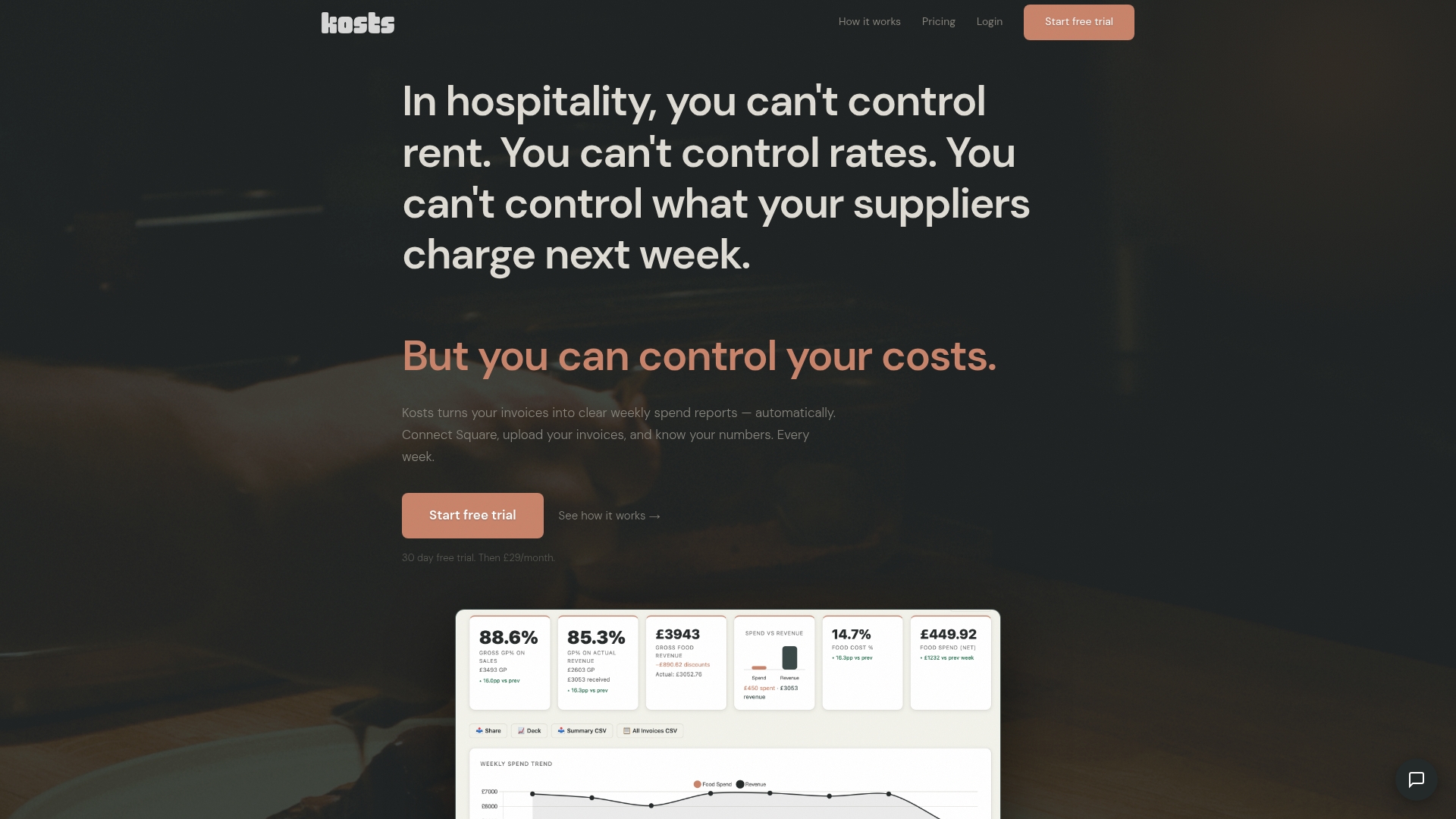
Explore Kosts to see how a platform built by a working chef, specifically for UK independents, can turn your invoices into clear weekly spend reports in minutes. From AI invoice scanning to Xero and Square integration, it is designed to fit your workflow from day one. You can also browse the restaurant cost reports guide to understand exactly what good financial reporting looks like before you commit to anything. Start your 30-day free trial and see the difference structured visibility makes.
Frequently asked questions
What is a cost management tool for restaurants?
A cost management tool helps restaurants track, control, and analyse expenses such as food, labour, and overhead, usually through automated tracking and analysis rather than manual entry. It replaces spreadsheets with live, structured financial insight.
Can cost management tools really save my restaurant money?
Yes. By providing real-time visibility and flagging cost leaks early, these tools typically deliver margin improvements and time savings that far exceed the cost of a monthly subscription.
Are expensive enterprise systems necessary for small UK restaurants?
No. Enterprise systems are often overkill for independent operators. A targeted, right-sized tool delivers better usability and faster ROI for most small restaurants.
What features should I look for in a cost management tool?
Prioritise automation, simple invoice capture, clear dashboard reporting, and compatibility with your existing POS or accounting software. Ease of use matters as much as the feature list.