
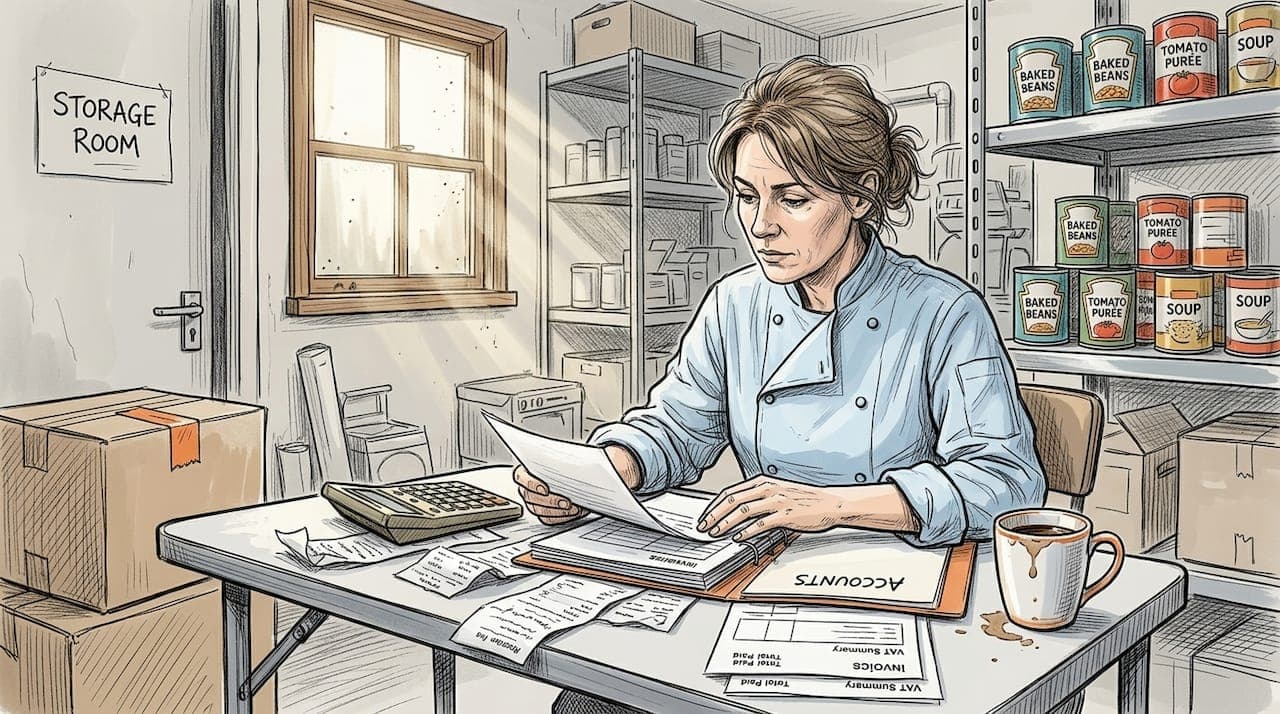
Running an independent restaurant in the UK means operating on margins that leave very little room for error. Food costs, labour, utilities, and supplier invoices stack up fast, and without a clear system in place, money leaks out in ways that are easy to miss. Many operators are so focused on service and quality that expense tracking becomes reactive rather than proactive. Fading thermal receipts, unchecked supplier price increases, and missed weekly reviews quietly erode profitability. This guide walks you through a proven, step-by-step expense tracking process built around real industry benchmarks, practical tools, and expert insights that will help you take back control of your bottom line.
Table of Contents
- Get prepared: what you need before tracking expenses
- Step-by-step process for tracking restaurant expenses
- Troubleshooting and common mistakes in expense tracking
- How to verify and interpret your expense data for profit improvement
- Turn tracking into profit: smart tools for UK restaurants
- Frequently asked questions
Key Takeaways
| Point | Details |
|---|---|
| Separate and categorise | Always keep business finances apart from personal and make expense categories clear before you start tracking. |
| Track prime cost weekly | Calculate food and labour combined costs every week for best profit control in UK restaurants. |
| Digitise and automate | Scan receipts right away and use real-time expense tracking tools to boost accuracy and efficiency. |
| Benchmark and review | Compare your expenses to UK industry norms and run regular reviews to spot leaks and improve margins. |
| Troubleshoot proactively | Set alerts for supplier prices and handle fading receipts or inventory waste before they become costly errors. |
Get prepared: what you need before tracking expenses
Before you can track anything effectively, you need the right foundations in place. Expense tracking requires separating business and personal finances, categorising expenses clearly, and managing receipts digitally. If your business transactions are mixed with personal spending, your data will be unreliable from the start. Open a dedicated business bank account if you have not already done so.
Next, establish your expense categories. For a restaurant, these typically include food and beverage, labour, rent, utilities, marketing, repairs, and waste. Having consistent categories means your reports are comparable week to week, which is where the real insight comes from. You can find a solid expense management overview to help you structure this from the outset.
Here is a comparison of the tools available to you:
| Method | Cost | Speed | Accuracy | Best for |
|---|---|---|---|---|
| Manual spreadsheets | Free | Slow | Low | Very small operations |
| Accounting software (Xero, QuickBooks) | £10-£40/month | Medium | High | Growing independents |
| Invoice scanning apps (Kosts, Jelly) | £20-£50/month | Fast | Very high | Busy kitchens |
| Hybrid (software + manual checks) | Variable | Medium | High | Most independents |
For receipt management specifically, look at automated tracking solutions that let you photograph invoices on the spot. Tools like Xero, QuickBooks, and dedicated hospitality platforms all offer receipt capture features that feed directly into your accounts.
Pro Tip: Thermal receipts from suppliers begin to fade within weeks. Scan them the same day they arrive using your phone or a dedicated scanner. A faded receipt is as good as no receipt when HMRC comes calling.
Following cost control best practices from the start means you are building habits that scale as your business grows, rather than scrambling to fix a broken system later.
Step-by-step process for tracking restaurant expenses
With your tools and preparation in place, it is time to dig into the step-by-step process for effectively tracking your restaurant expenses. The key is building a rhythm across daily, weekly, and monthly actions.
Daily actions:
- Photograph or scan every supplier invoice and delivery note on arrival
- Log any cash purchases immediately with a note of the category
- Record waste at the end of each service using a simple waste log
- Check your till reconciliation against expected revenue
Weekly actions: 5. Review all captured invoices and confirm categories are correct 6. Calculate your food cost percentage for the week 7. Compare actual spend against your budget for each category 8. Check your weekly spend checklist to ensure nothing has been missed
Monthly actions: 9. Run a full profit and loss review 10. Audit your supplier invoices for price changes 11. Review labour hours against revenue to check your labour cost ratio 12. Update your menu pricing if food costs have shifted significantly
Daily food and beverage costing, portion control, inventory counts, waste logging, and menu engineering are all vital for tracking and controlling expenses accurately. Portion control in particular is underestimated. If your kitchen is serving 10% more protein per plate than your recipe specifies, that gap compounds across hundreds of covers.
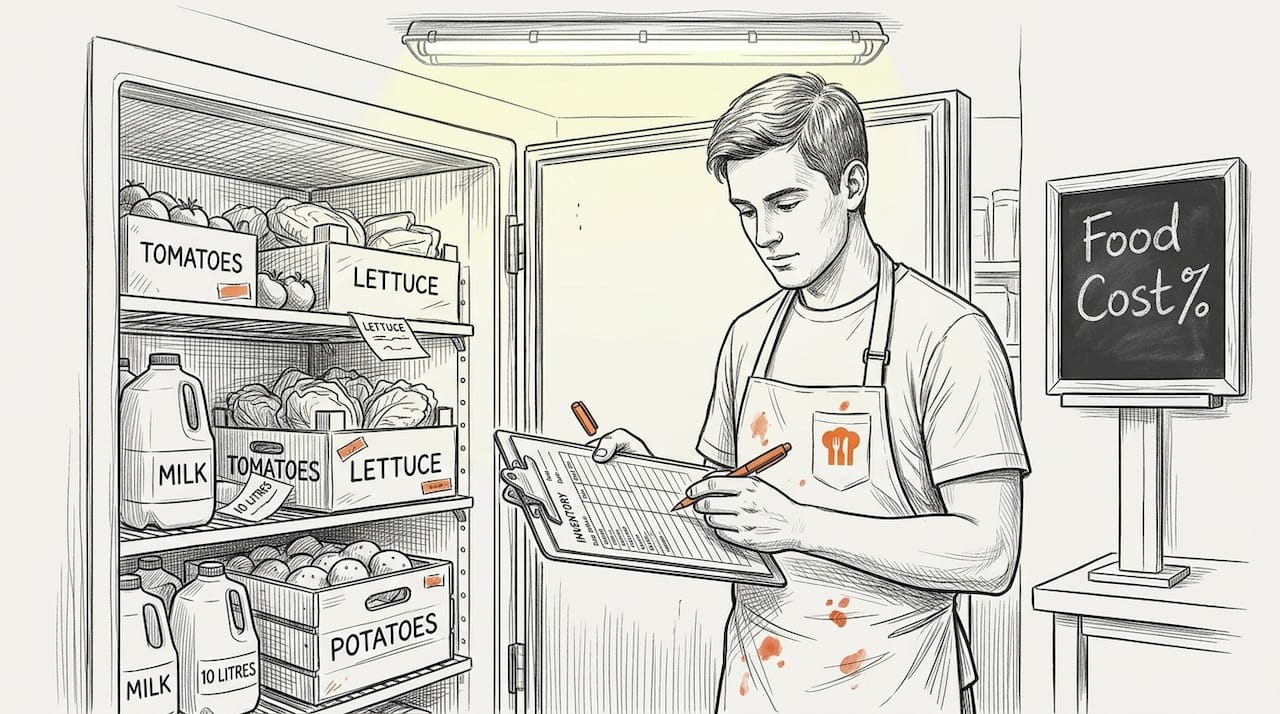
Here are the benchmark expense categories for UK independent restaurants:
| Category | Benchmark % of revenue | Warning threshold |
|---|---|---|
| Food and beverage | 28-35% | Above 38% |
| Labour | 25-35% | Above 38% |
| Rent and rates | 8-12% | Above 15% |
| Utilities | 3-6% | Above 8% |
| Waste | 2-4% | Above 5% |
| Marketing | 1-3% | Above 5% |
Restaurants that implement real-time expense tracking consistently see margin improvements of 2-3% compared to those relying on end-of-month reviews. On a £500,000 turnover, that is an extra £10,000 to £15,000 in profit per year. For edge cases like perishable stock, build a daily waste log into your closing checklist. For seasonal spikes such as summer outdoor dining, revisit your benchmarks monthly rather than quarterly. You can find detailed food cost tracking tips and a practical cost control checklist to support each stage of this process.
Troubleshooting and common mistakes in expense tracking
As you implement these steps, it is natural to encounter snags. Let us cover how to troubleshoot them and minimise financial leaks before they become serious problems.
The most common mistakes independent restaurants make include:
- Lost or damaged receipts: Thermal paper fades, paper gets wet, and invoices go missing in a busy kitchen. Fix this by scanning on arrival, every time without exception.
- Incorrect categorisation: Putting a cleaning supply invoice under food costs skews your food cost percentage and makes your data misleading. Review categories weekly.
- Ignoring small leaks: A £3 portion overage per dish across 200 covers a week is £600 gone. Waste, overtime, and rounding errors add up faster than most operators realise.
- Supplier price creep: Suppliers sometimes increase prices incrementally, knowing that busy operators rarely check line-by-line. Without regular audits, you absorb these increases silently.
- Cash purchases without records: Any cash transaction that goes unlogged is invisible to your tracking system and distorts every metric you rely on.
Edge cases such as receipt fading, inventory shrinkage, cash reconciliation issues, overtime compliance, and supplier price creep are among the most common sources of financial leakage in independent restaurants. Addressing them proactively is far cheaper than discovering them in a year-end audit.
Pro Tip: Set a recurring calendar alert every four weeks for a supplier price review. Compare your current invoices against those from the previous month line by line. Do the same for overtime hours. Catching a £0.20 per kilo price increase on chicken early saves you hundreds over a quarter.
"Independent restaurants can absolutely compete with chains when they use data-driven supplier negotiation and daily dashboards. The difference is not budget, it is discipline and visibility." — Restaurant operations consultant
For practical cost control examples and a clear cost control workflow, explore resources built specifically for independent operators rather than enterprise chains.
How to verify and interpret your expense data for profit improvement
Troubleshooting keeps your process robust. Now let us make sure you are using your data to genuinely improve profitability rather than just filing it away.
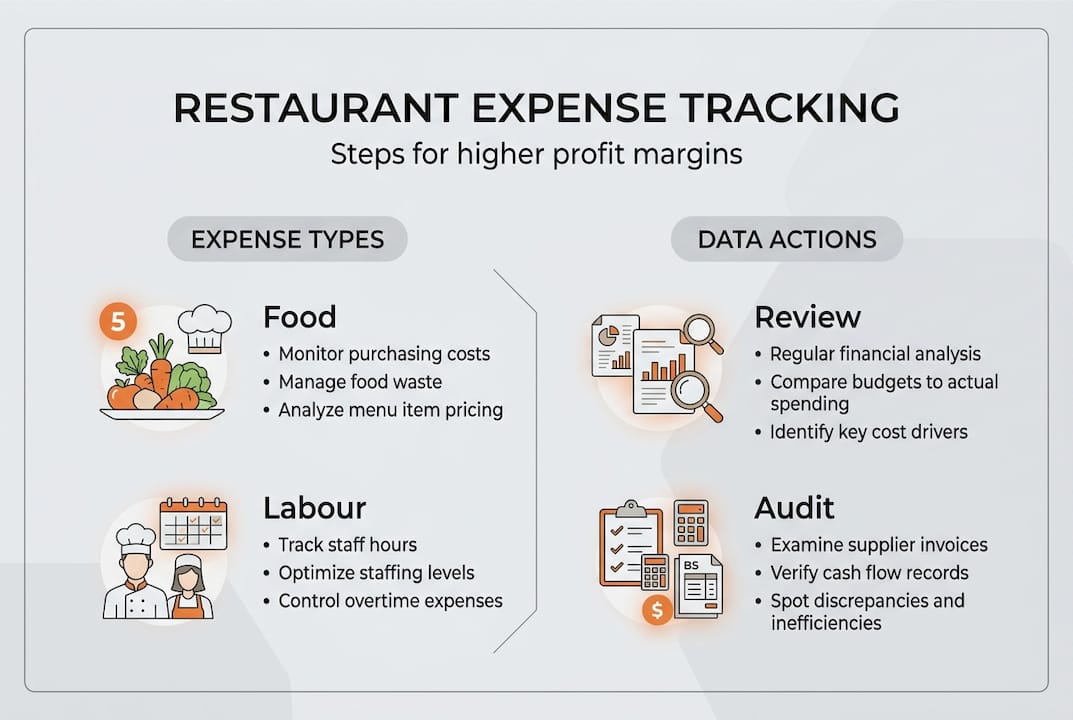
Each week, sit down with your tracked data and ask three questions: Where did I overspend? Where did I underspend? And does my actual food cost match my theoretical food cost? The gap between actual and theoretical food cost is one of the most revealing numbers in your business.
Here is how to interpret that variance:
- Under 2% variance: Your portion control and purchasing are well managed. Maintain current systems.
- 2-5% variance: There is likely waste, theft, or portioning inconsistency. Investigate your kitchen processes.
- Above 5% variance: This is a significant problem requiring immediate attention. Conduct a full stock audit and review supplier invoices.
Prime cost is the key metric for profitability, and calculating it weekly is essential for UK independent restaurants. Prime cost is simply your total food and beverage cost plus your total labour cost, expressed as a percentage of revenue. The UK benchmark sits between 55% and 65%. If yours is above 65%, you are likely losing money or barely breaking even.
Here is a quick reference table for your key metrics:
| Metric | Healthy range | Action if outside range |
|---|---|---|
| Food cost % | 28-35% | Review portion sizes and supplier pricing |
| Labour cost % | 25-35% | Audit rotas and overtime |
| Prime cost % | 55-65% | Investigate both food and labour simultaneously |
| Gross profit % | 65-72% | Review menu pricing and waste |
| Waste % | 2-4% | Tighten ordering and portion control |
For a deeper look at reading your numbers, the food cost analysis guide covers variance interpretation in detail. Pair this with solid budgeting advice to set realistic targets for each category going forward. The goal is not perfection in week one. It is steady, measurable improvement each month.
Turn tracking into profit: smart tools for UK restaurants
You now understand how to track and interpret expenses for better profits. The final step is making the process seamless so it actually gets done consistently, even during your busiest weeks.
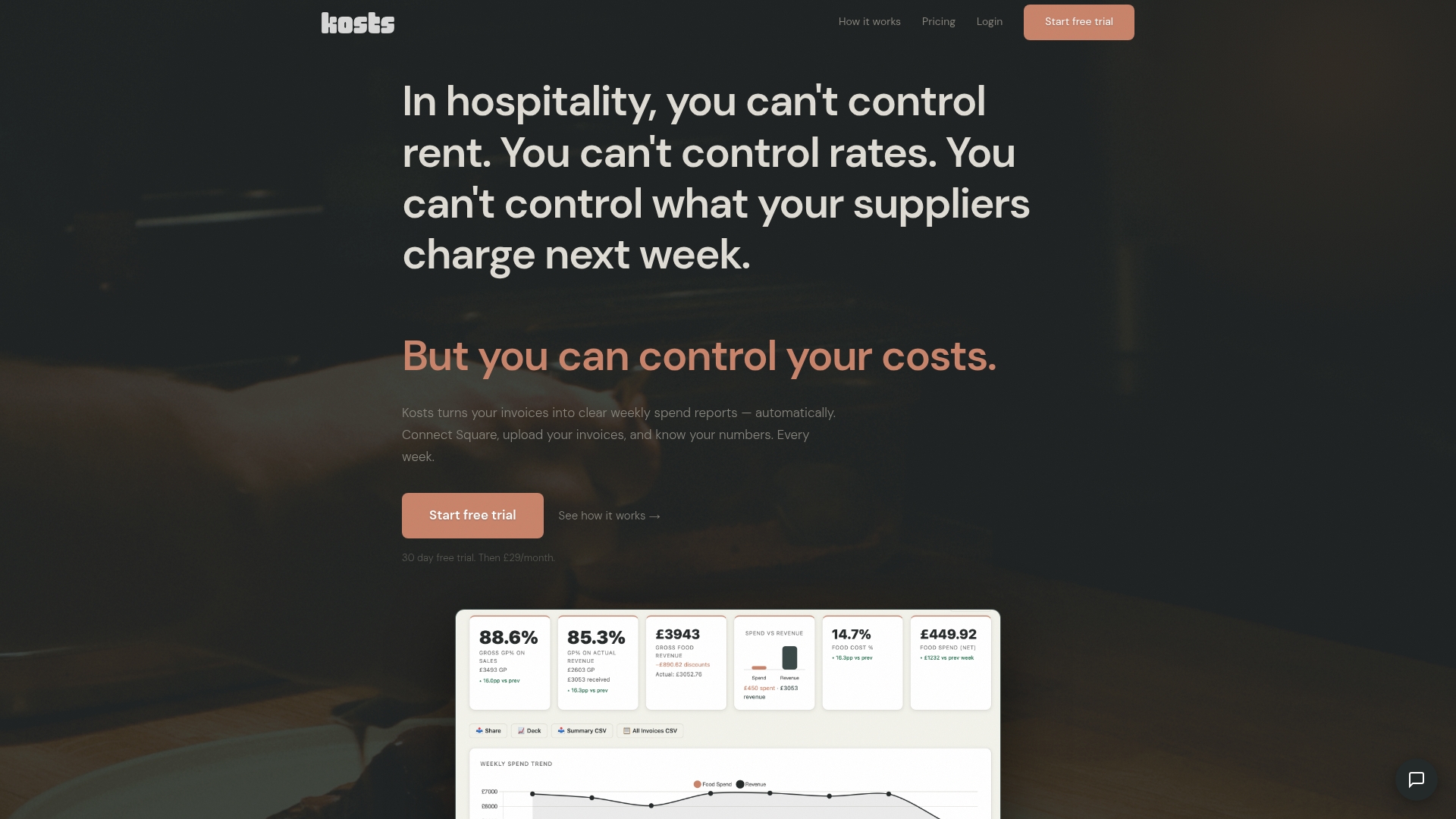
Manual tracking works, but it is time-consuming and prone to human error. Modern restaurant expense tracking platforms automate the heavy lifting: invoice scanning, category assignment, cost calculations, and weekly reporting all happen without you building a single spreadsheet. Kosts was built by a working chef who understood exactly what independent operators need, which is why it focuses on simplicity and speed rather than overwhelming features. You can upload invoices by photo, PDF, or email forwarding, and the AI extracts supplier, item, and cost data automatically. The result is a clear weekly spend report that tells you precisely where your money went. Automating this process can reduce admin time by up to 90% and improve margins by 2-3%, which for most independents is the difference between a stressful month and a profitable one. Start with the expense management overview to see how the full system fits together, and try Kosts free for 30 days.
Frequently asked questions
How often should I review my restaurant expenses for optimal control?
You should review expenses at least weekly and run a full monthly analysis. Regular weekly reviews help catch errors and variances before they compound into larger financial problems.
What is the prime cost, and why is it important for UK restaurants?
Prime cost is the combined total of your food and labour costs as a percentage of revenue. Calculating it weekly is essential for staying profitable in the UK's thin-margin restaurant market, where the benchmark sits between 55% and 65%.
How should I handle fading thermal receipts from suppliers?
Scan thermal receipts on the day they arrive using a phone camera or dedicated scanner. Thermal receipts fade quickly, and a digital copy ensures your records remain intact for accounting and tax purposes.
How can I prevent supplier price creep in my UK restaurant?
Set a monthly calendar reminder to compare current invoices against previous ones line by line. Supplier price creep is a silent profit killer that tracking software with automated alerts can help you catch early.
What margin improvement can I expect from automating expense tracking?
Automating your expense tracking typically reduces admin time by up to 90% and can improve margins by 2-3%, which on a £500,000 turnover equates to an additional £10,000 to £15,000 in annual profit.