
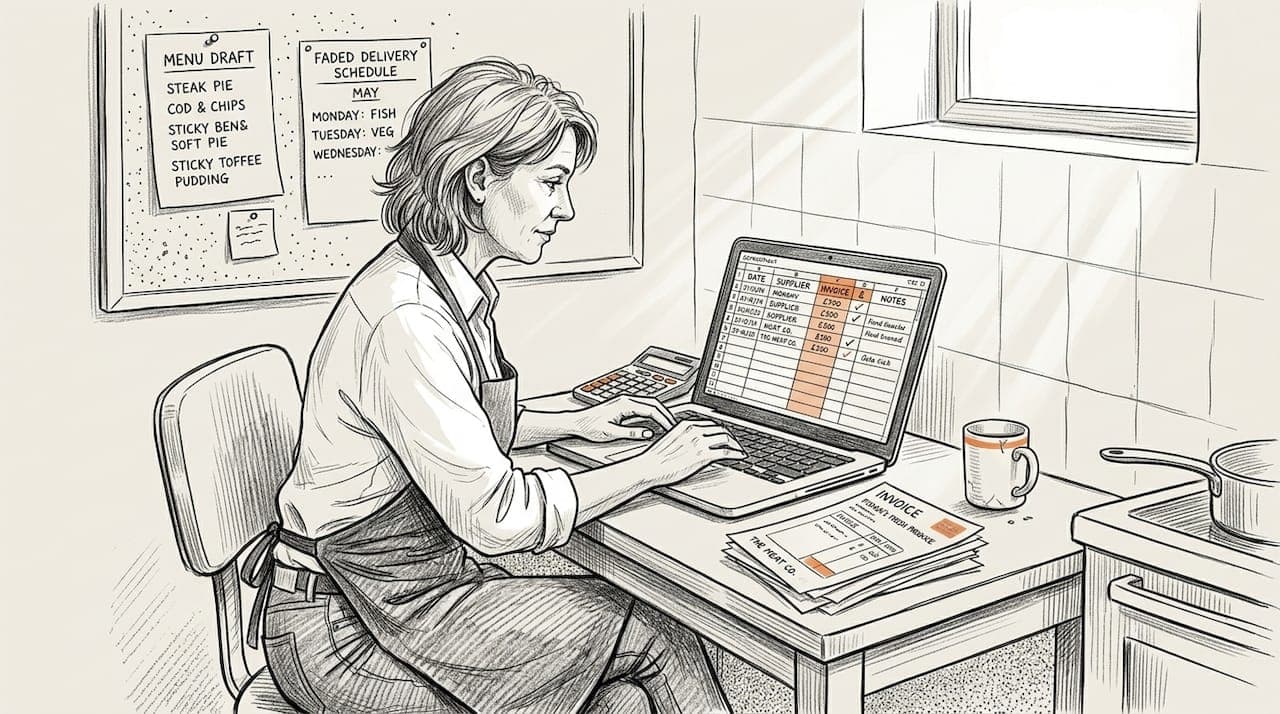
Running an independent restaurant in the UK means operating on tight margins where a few percentage points can separate a profitable month from a loss. Many owners find themselves buried in invoices, guessing at food costs, and reacting to problems only after they've already eaten into profits. The good news is that better financial control doesn't require an accountant on staff or expensive enterprise software. With the right habits and tools, you can turn messy numbers into clear, actionable insight. Prime cost control is the foundation of restaurant profitability, and this guide will show you exactly how to build on it.
Table of Contents
- Master your prime cost for better profit margins
- Track food costs and control waste
- Make menu engineering work for your bottom line
- Get control with weekly spend and expense tracking
- Automate to save time and reduce errors
- A fresh perspective on restaurant accounting: small changes, big impact
- Take control of your restaurant's finances today
- Frequently asked questions
Key Takeaways
| Point | Details |
|---|---|
| Prime cost focus | Tracking your prime cost weekly stops small losses from becoming serious profit drains. |
| Menu engineering impact | Tweaking your menu to highlight high-margin dishes can have a dramatic effect on your bottom line. |
| Spend tracking routine | A set weekly tracking schedule makes expense control automatic and stress-free. |
| Embrace automation | Integrating accounting software saves time, cuts errors, and boosts financial clarity. |
| Small changes matter | Continuous, small improvements are more effective than overwhelming overhauls in restaurant accounting. |
Master your prime cost for better profit margins
Prime cost is the single most important number in your restaurant. It combines your cost of goods sold (COGS) with your total labour costs, giving you a clear picture of what it actually costs to produce and serve your food. For most UK independent restaurants, a healthy prime cost sits between 55% and 65% of total revenue. If yours is creeping above that, your margins are under pressure whether you realise it or not.
Measuring prime cost weekly is essential for catching overruns before they compound. Waiting until the end of the month is like checking your fuel gauge after you've already broken down. Weekly visibility means you can act fast.
Here are the key levers for keeping prime cost in check:
- Menu engineering: Remove or reprice dishes where ingredient costs are too high relative to what customers will pay
- Portion control: Standardise recipes and train staff to follow them consistently
- Waste tracking: Log spoilage and over-preparation daily to identify patterns
- Rota management: Match staffing levels to actual covers rather than habit or guesswork
- Supplier reviews: Renegotiate contracts when ingredient prices shift significantly
Pro Tip: Connect your point-of-sale system with your accounting software so prime cost calculations happen automatically each week. This removes the manual effort and makes it far easier to spot trends over time. Pairing this with solid expense management tips will give you a much cleaner view of where your money is actually going.
Track food costs and control waste
Once your prime costs are under control, next up is getting strategic with your food spending and waste. Food cost is typically the largest variable expense in any restaurant, and even small improvements here can have a meaningful impact on your bottom line.
Here's a simple weekly process to follow:
- Count your opening stock at the start of each week
- Record all deliveries as they arrive, noting supplier and item cost
- Count closing stock at the end of the week
- Calculate food cost using the formula: (Opening stock + Purchases) minus Closing stock, divided by Revenue
- Compare against your target and investigate any variance above 2%
Tracking food purchase and waste trends reveals hidden drains that are easy to miss when you're busy on the floor.
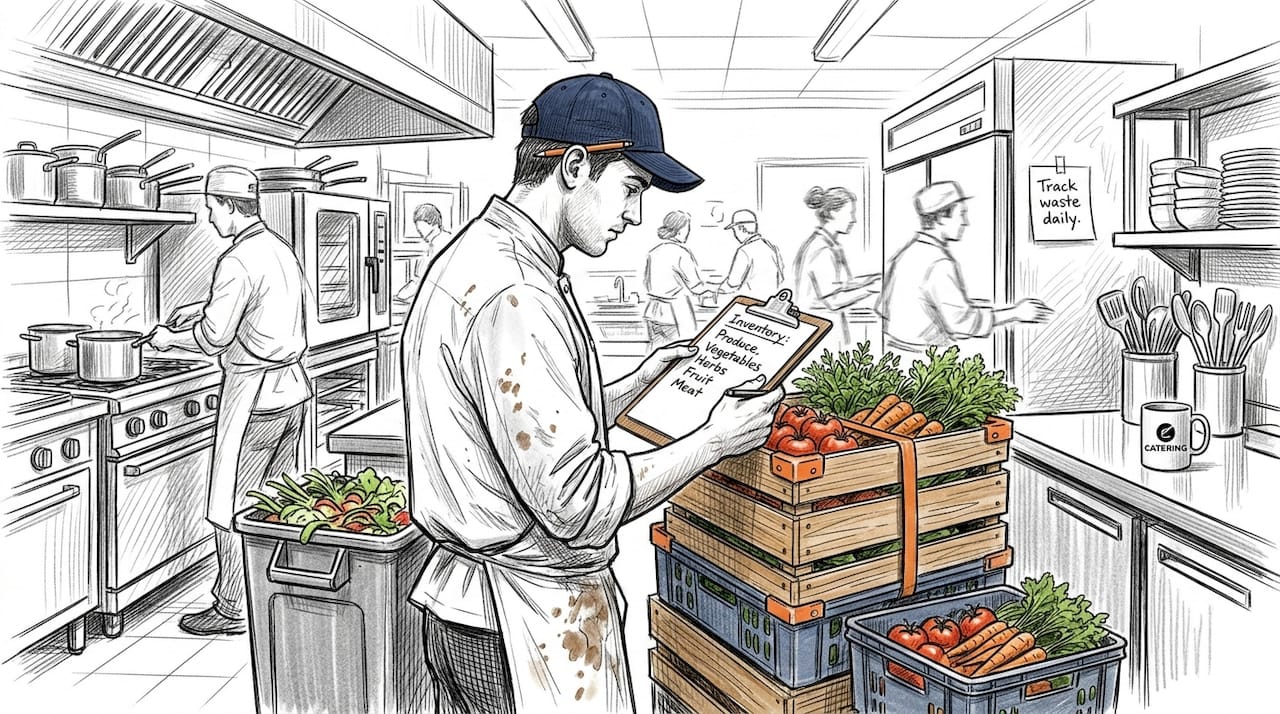
| Waste category | Weekly waste % | Estimated monthly cost impact |
|---|---|---|
| Over-preparation | 4% | £320 |
| Spoilage | 3% | £240 |
| Incorrect portioning | 2% | £160 |
| Total | 9% | £720 |
That £720 per month is money that could go directly to your bottom line. Setting a realistic waste reduction target of even 3% can save a typical small restaurant over £2,500 per year.
Pro Tip: Use your tracked data when negotiating with suppliers. If you can show a supplier that their delivery quality is contributing to spoilage, you have a strong case for better terms or improved product consistency. For more detail on this, explore these food cost tracking tips and learn how to analyse food costs for deeper profitability insight.
Make menu engineering work for your bottom line
Effective cost tracking naturally leads to the menu, the heart of what you offer and earn from each day. Menu engineering is the practice of deliberately designing your menu to steer customers towards dishes that are both popular and profitable. It sounds technical, but in practice it's about knowing your numbers and making small, intentional changes.
"The most profitable restaurants don't just cook great food. They know exactly which dishes make them money and make sure those dishes are impossible to ignore on the menu."
Promoting high-margin items through menu engineering directly improves cost efficiency without requiring you to cut corners on quality.
| Dish type | Food cost % | Contribution margin | Action |
|---|---|---|---|
| High popularity, high margin | 28% | £8.50 | Feature prominently |
| High popularity, low margin | 42% | £3.20 | Reprice or reformulate |
| Low popularity, high margin | 30% | £7.80 | Reposition on menu |
| Low popularity, low margin | 45% | £2.10 | Remove or replace |
Quick-win menu tweaks worth trying:
- Use boxes or borders to draw the eye to your most profitable dishes
- Remove currency symbols from prices to reduce price sensitivity
- Limit the number of options per category to reduce decision fatigue
- Add brief, appetising descriptions to high-margin items
- Test a seasonal specials board to introduce new high-margin dishes without a full reprint
Using your financial data for menu planning ensures that every menu change is backed by real numbers, not just instinct.
Get control with weekly spend and expense tracking
Now that your menu strategies are tuned, let's move to habits that put accounting discipline on autopilot. Weekly spend tracking is crucial for identifying cost surges before they threaten your margins. The goal is a simple, repeatable routine that takes no more than 30 minutes each week.
Here's a practical weekly expense review process:
- Gather all invoices received during the week, whether paper, PDF, or email
- Categorise each expense by type: food, drink, labour, utilities, packaging, and so on
- Compare totals against last week and against your weekly budget
- Flag any category that is more than 5% above target for investigation
- Record your findings in a simple spreadsheet or accounting platform
Expenses that regularly catch managers off guard include:
- Delivery surcharges added by suppliers without notice
- Utility bill increases that arrive quarterly but spike unexpectedly
- Packaging and disposables creeping up as order volumes grow
- Maintenance and repair costs that aren't budgeted monthly
- Card processing fees that vary with sales volume
Building this routine into your week removes the end-of-month shock of discovering costs have spiralled. Assign a specific time slot, perhaps Monday morning before service, and stick to it. A solid weekly spend checklist makes this even faster, and pairing it with these restaurant budgeting tips will sharpen your overall financial discipline.
Automate to save time and reduce errors
The right routines are good, but automation turns good habits into consistent results. Modern restaurant accounting software connects your sales data, staffing costs, and supplier invoices in one place, removing the need to manually reconcile figures across multiple spreadsheets.
Automation reduces manual mistakes and frees up time you can reinvest in running a better restaurant. For a busy independent owner, that time saving is genuinely significant.
Key automation features that matter most for small restaurants:
- Invoice scanning: Upload a photo or PDF and have supplier, item, and cost data extracted automatically
- Revenue sync: Pull sales figures directly from your POS so food cost percentages update in real time
- Weekly spend reports: Receive a clear summary of all costs by category without building it manually
- Supplier spend analysis: See at a glance which suppliers are costing you most and whether prices are creeping up
- Xero or accounting integration: Keep your bookkeeper or accountant in sync without manual data entry
A word of caution: automation is a tool, not a replacement for judgement. Always review your automated reports with a critical eye. If a number looks wrong, it probably is, and catching that early is far better than discovering it at year end. Explore how automated expense tracking can fit into your existing workflow without adding complexity.
A fresh perspective on restaurant accounting: small changes, big impact
Here's an honest perspective built from real-world experience: most restaurant owners who struggle with their finances aren't struggling because they lack knowledge. They're struggling because they've convinced themselves that proper accounting requires a complete overhaul of how they operate. That belief leads to paralysis.
The truth is that three small, repeatable habits move the needle more than any grand system redesign. Reviewing your prime cost every Monday. Counting stock consistently at the same time each week. Categorising invoices as they arrive rather than letting them pile up. That's it. Those three things, done consistently, will give you more financial clarity than a complicated new process you abandon after a fortnight.
We've seen owners invest in elaborate software setups and still not know their food cost percentage at the end of the month. We've also seen owners with a simple weekly routine catch a supplier overcharge that was quietly costing them £400 a month. Consistency beats complexity every time.
Pro Tip: Focus on improving one metric by 1% each week rather than trying to fix everything at once. Over a quarter, those small gains compound into real profit. If you're ready to streamline cost control, start with the one number that worries you most and build from there.
Take control of your restaurant's finances today
The steps in this guide work best when you have the right tools supporting them. Kosts is built specifically for independent UK restaurants by someone who has worked in professional kitchens and understands the real pressures you face.
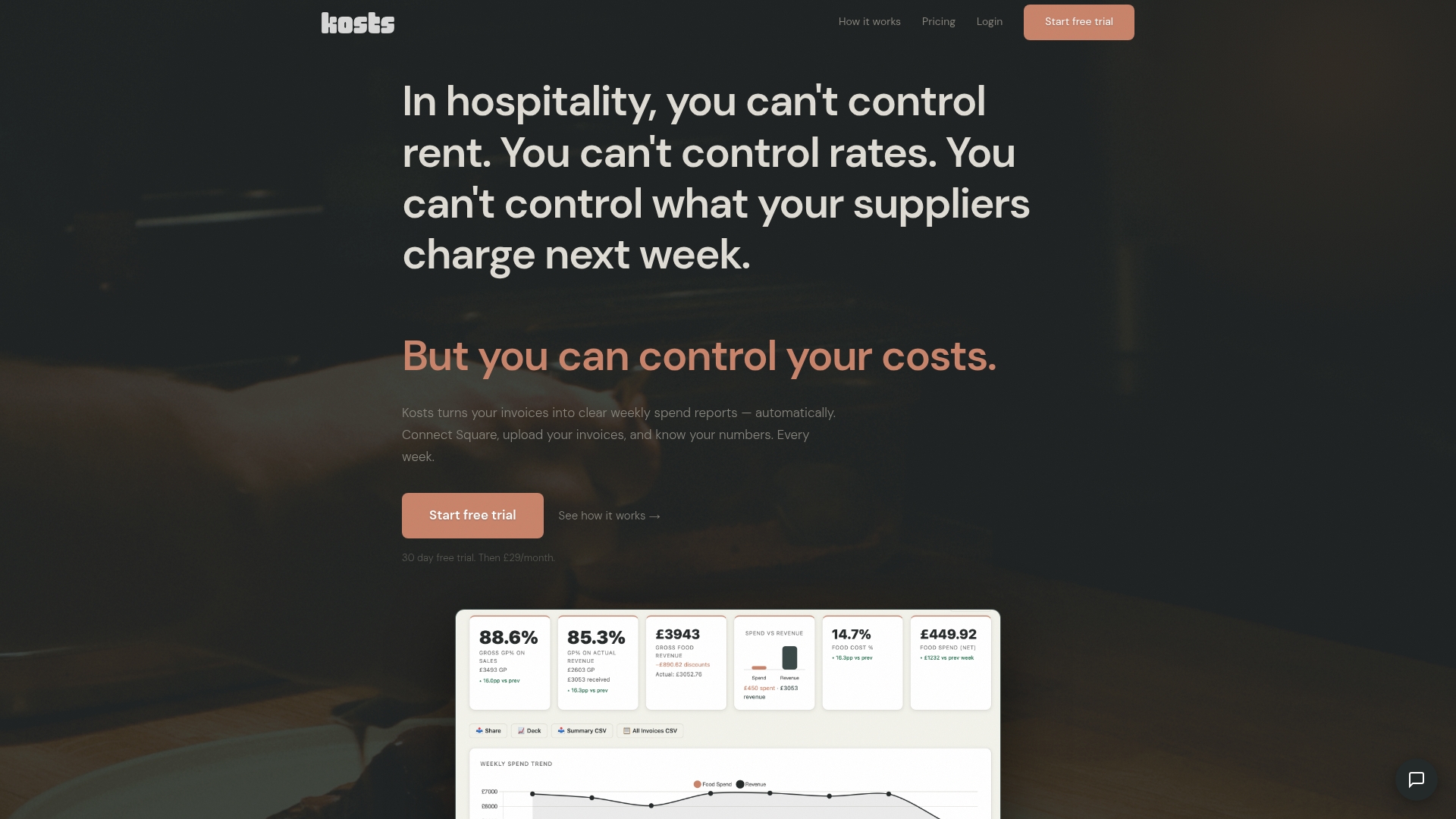
With the Kosts accounting platform, you can upload invoices by photo, PDF, or email, and the AI automatically extracts supplier, item, and cost data into clean weekly spend reports. Revenue syncs directly from Square or Xero, so your food cost percentage and gross profit figures are always up to date. No manual spreadsheets. No end-of-month guesswork. Just clear, reliable numbers every week. Start your 30-day free trial today and see how much easier restaurant accounting can be.
Frequently asked questions
What is the most important cost to track in a UK restaurant?
The prime cost, which combines labour and cost of goods sold, is the most crucial metric for restaurant profitability. Tracking it weekly prevents small overruns from becoming serious profit leaks.
How often should food costs be reviewed?
Food costs should be reviewed every week so you can catch issues before they grow. Weekly cost tracking is essential for keeping wastage and spend under control.
Does restaurant accounting software really save time?
Yes, automation cuts manual tracking time significantly and reduces the risk of costly errors. Automation reduces mistakes and gives you back hours each week to focus on your business.
How can menu design improve my restaurant's finances?
Menu engineering increases profits by steering customers towards higher-margin dishes and reducing food waste. Promoting high-margin items is one of the most direct ways to improve cost efficiency without raising prices.
What's the biggest mistake restaurant owners make with accounting?
Overcomplicating their systems and failing to track core costs weekly leads to confusion and missed profit opportunities. Simple, repeatable routines consistently outperform complex overhauls that never get fully implemented.