
TL;DR:
- Unchecked kitchen spending erodes profits despite high customer volume.
- Automated spend tracking provides real-time insights to optimize costs and margins.
- Effective expense monitoring enables confident menu innovation while maintaining profitability.
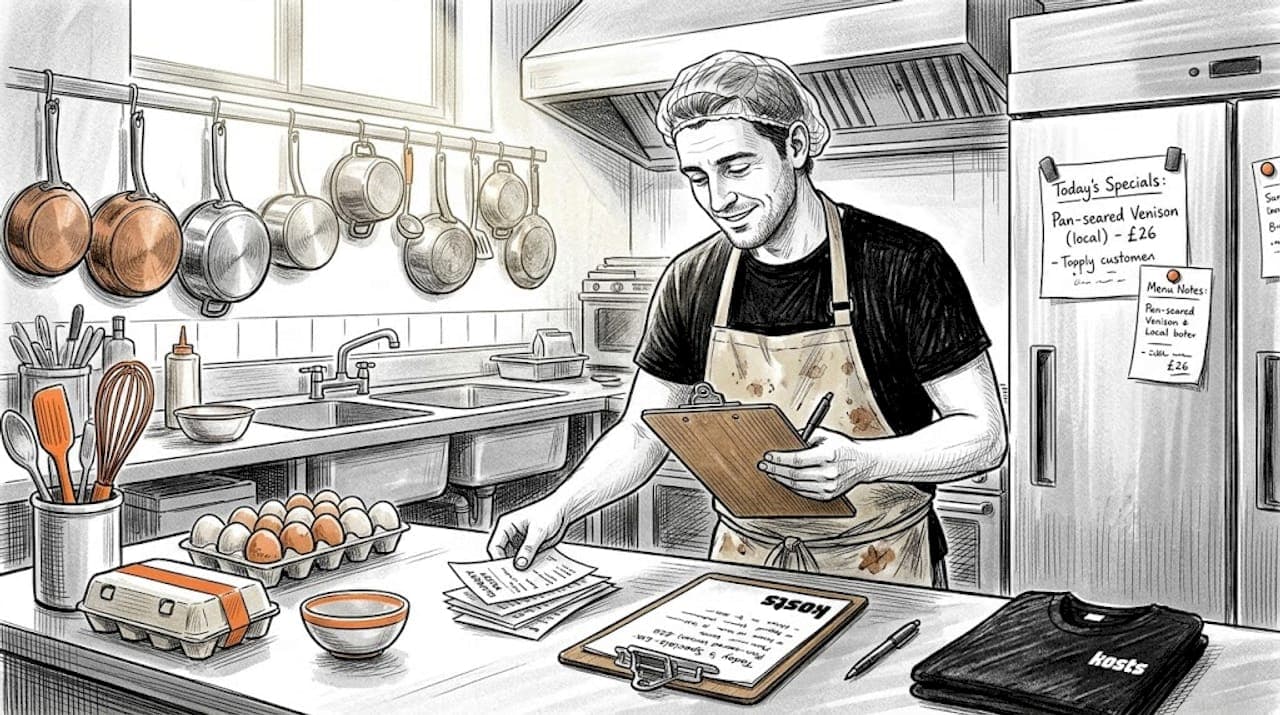
Passion keeps a kitchen alive, but it does not pay the bills. Many independent restaurants run busy services week after week, yet still find themselves short at the end of the month. The culprit is rarely a lack of customers. More often, it is unchecked kitchen spending that quietly chips away at margins. Food costs typically account for 28 to 35 per cent of a restaurant's revenue, and without a clear system to monitor them, even a thriving kitchen can haemorrhage money. This guide explains how spend tracking works, why chefs need to own it, and what practical steps you can take to turn financial visibility into genuine profit.
Table of Contents
- The hidden impact of kitchen spending on restaurant profits
- How spend tracking equips chefs to make smarter decisions
- Modern spend tracking tools: features and benefits
- Common mistakes and pitfalls in chef spend tracking
- What most chefs miss about spend tracking
- Take the next step: unlock your kitchen's financial potential
- Frequently asked questions
Key Takeaways
| Point | Details |
|---|---|
| Chefs drive restaurant profits | Small spending choices in the kitchen often shape the financial outcome more than realised. |
| Spend tracking unlocks insight | Tracking tools give chefs clear visibility into costs, enabling smarter menu and supplier decisions. |
| Automation ensures accuracy | Modern spend tracking solutions reduce human error and enable real-time financial control. |
| Avoid common pitfalls | Daily logging and recognising wastage are critical habits for sustaining profit margins. |
The hidden impact of kitchen spending on restaurant profits
Every ingredient your kitchen orders, every supplier invoice that lands in your inbox, and every portion that leaves the pass has a financial consequence. Most chefs understand this in theory, but the day-to-day pressure of service makes it easy to push cost awareness to the back of the queue. The problem is that small, repeated overspends do not stay small. Order an extra case of produce each week that goes partially unused, and by the end of a quarter you have wasted hundreds of pounds without a single dramatic incident to point to.
The relationship between kitchen decisions and business health is tighter than most people realise. A chef who orders based on gut feeling rather than actual sales data is essentially making financial forecasts without any information. That approach might work during a good run, but it creates fragility. When a supplier raises prices or a quiet week hits, there is no buffer and no clear picture of where to cut back.
"Unchecked expenses often result in missed profit targets and cash flow fluctuations," which is why building a restaurant expense tracking process is not optional for restaurants serious about longevity.
Here is what unchecked kitchen spending typically leads to:
- Unpredictable cash flow that makes it difficult to pay suppliers on time
- Inflated food cost percentages that erode gross profit quietly over months
- Reactive decision-making instead of planned, strategic purchasing
- Supplier dependency without the data to negotiate better terms
The ability to optimise restaurant costs starts with knowing exactly where money is going. Without that foundation, every other improvement you try to make is guesswork.
Food cost callout: Industry benchmarks suggest food costs above 35 per cent are a warning sign. Many independent restaurants operate above this threshold without realising it, simply because they have no system to measure it consistently.
The chefs who build financially sustainable kitchens are not necessarily the most talented cooks. They are the ones who treat spending data with the same respect they give to a recipe. Precision matters in both.
How spend tracking equips chefs to make smarter decisions
Once you accept that spending visibility is non-negotiable, the next question is how to actually achieve it. Tracking kitchen spend is not about adding bureaucracy to an already demanding job. Done well, it gives chefs a clearer picture of which menu items are genuinely profitable, which suppliers offer the best value, and where ordering habits need to change.
Monitoring expenses accurately lets chefs and managers adjust menus and supplier relationships for profitability. This is a practical truth that shows up in real kitchens. When a chef can see that a particular dish costs significantly more to produce than its menu price justifies, they have the information needed to either reprice it, reformulate it, or retire it. Without that data, popular dishes can quietly become loss-makers.
Here is a step-by-step approach to building a reliable spend tracking habit:
- Log every invoice as it arrives. Do not let paperwork accumulate. Whether it is a PDF from your wholesaler or a photo of a delivery note, capture it immediately.
- Categorise spending by type. Separate protein, dairy, produce, dry goods, and beverages so you can see patterns by category rather than just totals.
- Review weekly, not monthly. Monthly reviews are too infrequent to catch problems early. A weekly rhythm lets you spot a rising cost before it compounds.
- Compare spend against sales. Raw spend figures mean little without context. Measure food cost as a percentage of revenue each week to understand whether your margins are holding.
- Share data with your team. When sous chefs and section leads can see cost data, they make better decisions at the pass and during prep.
Pro Tip: Reviewing your top five most expensive ingredients each week takes less than ten minutes but can reveal ordering patterns that are costing you far more than you realise.
The difference between manual and automated tracking is significant, particularly for busy kitchens:
| Feature | Manual tracking | Automated tracking |
|---|---|---|
| Time required | Several hours per week | Minutes per week |
| Error rate | High (data entry mistakes) | Very low (AI extraction) |
| Real-time visibility | No | Yes |
| Supplier comparison | Difficult | Straightforward |
| Integration with accounts | Manual export | Automatic sync |
For expense management for UK restaurants, the shift from spreadsheets to automated tools is one of the highest-impact changes an independent operator can make.
Modern spend tracking tools: features and benefits
The gap between a spreadsheet and a purpose-built spend tracking platform is wider than most chefs expect. Spreadsheets require manual data entry, are prone to formula errors, and offer no real-time view of where you stand. Modern tools built for the hospitality industry solve these problems directly.
Automated tracking systems empower chefs with instant insights, reducing costly errors and improving financial clarity. The key features that make the biggest difference in a working kitchen include:
- AI invoice scanning: Upload a photo or PDF of any invoice and the system extracts supplier, item, category, and cost data automatically. No typing, no transcription errors.
- Real-time dashboards: See your food cost percentage and gross profit updated as invoices come in, rather than waiting for a monthly reconciliation.
- Supplier breakdowns: Understand exactly how much you spend with each supplier, making it easier to consolidate orders or negotiate volume discounts.
- Integration with accounting software: Platforms that connect with tools like Xero remove the need to re-enter data across systems, saving significant admin time.
- Mobile access: Kitchen teams can log spend from anywhere, meaning data capture happens in the moment rather than being reconstructed from memory at the end of the week.
Pro Tip: When evaluating a spend tracking tool, test whether it can handle your actual invoice formats before committing. A tool that works seamlessly with your suppliers' paperwork will get used. One that requires workarounds will not.
Here is how key features compare across tracking approaches:
| Capability | Spreadsheet | Basic app | Purpose-built platform |
|---|---|---|---|
| Invoice capture | Manual | Semi-manual | Automated (AI) |
| Accounting integration | None | Limited | Full sync |
| Food cost % calculation | Manual formula | Basic | Automatic |
| Team access | File sharing | Limited | Built-in |
| Reporting | Manual | Basic charts | Weekly/monthly reports |
For real-time cost tracking, the advantage of a purpose-built platform is not just convenience. It is the quality of decisions you can make when you have accurate, current data rather than figures that are two weeks out of date.

Common mistakes and pitfalls in chef spend tracking
Even chefs who commit to tracking their spend often fall into patterns that undermine the whole exercise. Knowing what these pitfalls look like is the first step to avoiding them.
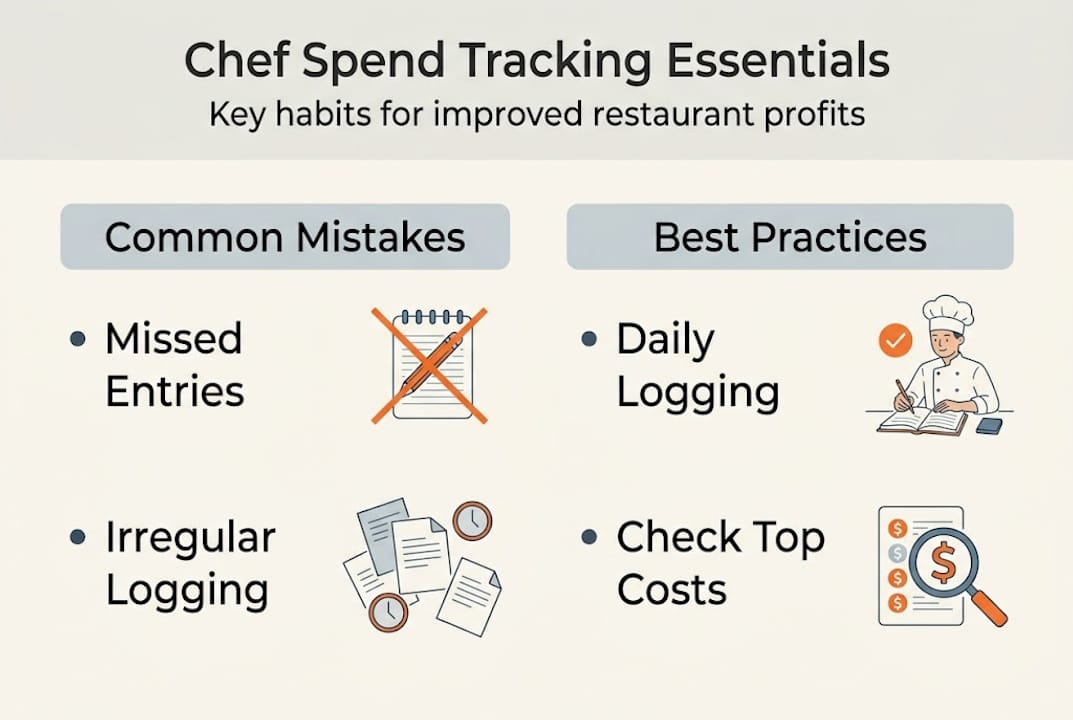
Typical hurdles include incomplete tracking and failing to account for food wastage, which can upend budgeting and forecasting. This is one of the most common and costly blind spots in independent restaurants.
The most frequent mistakes include:
- Inconsistent logging: Tracking invoices some weeks but not others creates gaps that make your data unreliable. Decisions made on incomplete data are often worse than decisions made with no data at all.
- Ignoring food wastage: If you are recording what you buy but not what you throw away, your food cost figures are distorted. Wastage is a real cost and needs to be captured.
- Overlooking small purchases: Cash purchases, small top-up orders, and emergency buys from local suppliers often go unrecorded. Over a month, these add up to a meaningful sum.
- Reviewing too infrequently: Looking at spend data once a month means problems have already compounded by the time you spot them.
- Treating tracking as a finance task: When spend tracking is seen as something the accountant does rather than something the kitchen owns, it loses its power to drive daily decisions.
"The most dangerous kitchen costs are not the big invoices you notice. They are the small, repeated expenses that never get logged and never get questioned."
For guidance on the financial side of running a kitchen, restaurant accounting tips can help bridge the gap between kitchen operations and business management.
Pro Tip: Build a daily two-minute routine at the end of service to log any purchases made that day. Consistency matters far more than perfection. A simple habit maintained every day beats a detailed review done once a month.
The chefs who get spend tracking right are not necessarily more organised by nature. They have simply built systems that make accurate logging the path of least resistance, rather than an extra task bolted onto an already full day.
What most chefs miss about spend tracking
Here is an uncomfortable truth: most chefs think of spend tracking as a constraint. A way for management or accountants to monitor what happens in the kitchen. That framing gets it exactly backwards.
Financial visibility is not a leash. It is the thing that gives you permission to take creative risks. When you know your food cost percentage is solid and your margins are healthy, you can experiment with a new dish, trial a premium ingredient, or invest in a seasonal menu without anxiety. Without that clarity, every decision carries hidden risk because you do not know how much room you actually have.
Monitoring food costs is arguably the most under-appreciated skill in a working chef's toolkit. Technical ability gets you through service. Financial awareness is what keeps the restaurant open long enough for your cooking to matter.
The chefs who build lasting, independent restaurants are not the ones who resist numbers. They are the ones who learn to read them as fluently as they read a menu. Spend tracking is not about limiting what you do in the kitchen. It is about making sure the kitchen is still there next year.
Take the next step: unlock your kitchen's financial potential
Understanding where your money goes is the foundation of every profitable restaurant. The insights in this guide point in one direction: consistent, accurate spend tracking is what separates kitchens that survive from those that thrive.
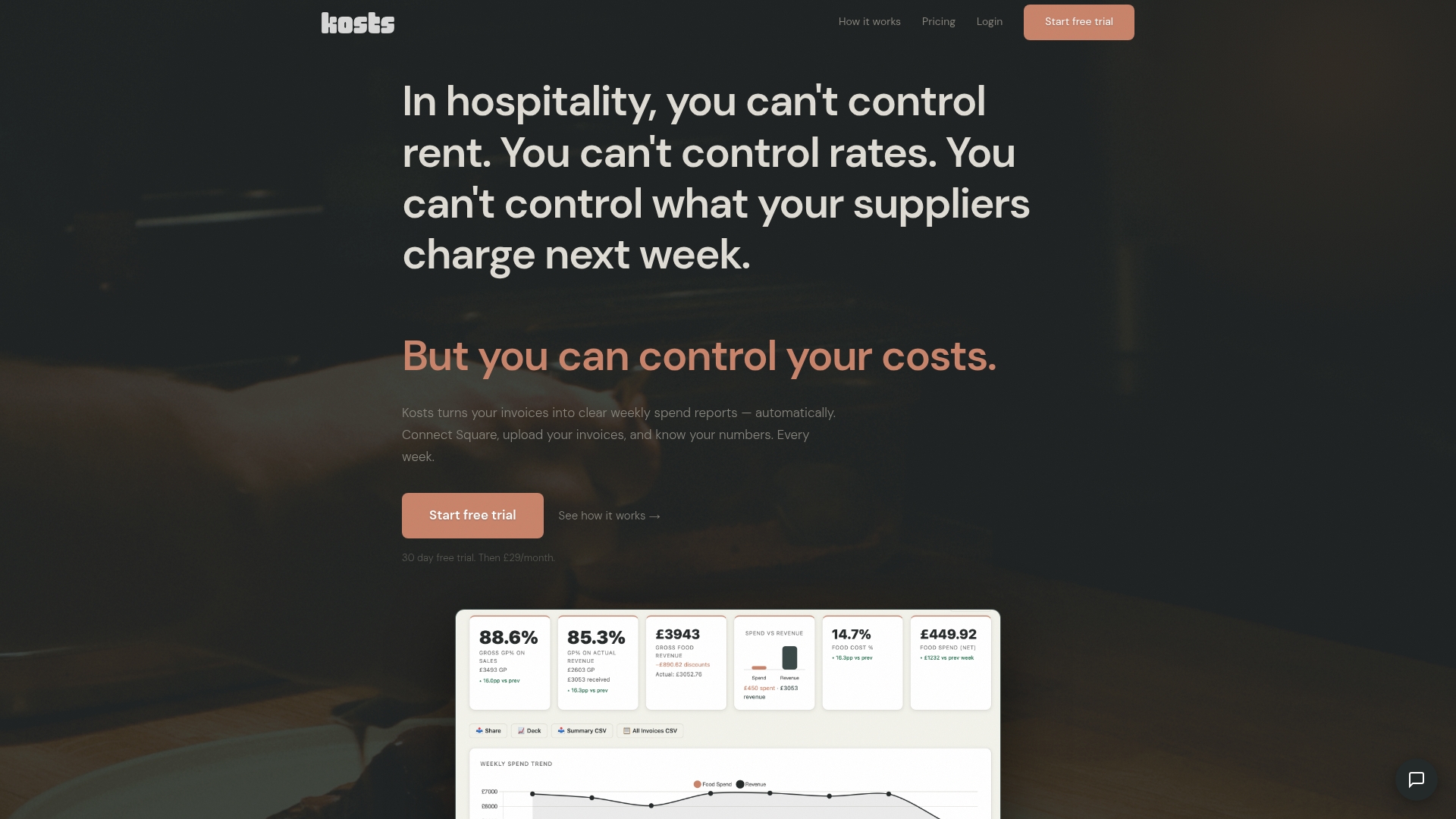
Kosts spend tracking is built specifically for independent UK restaurants by people who understand how kitchens actually work. Upload invoices by photo, PDF, or email, and Kosts automatically extracts the data you need. Connect with Xero or Square, view your food cost percentage in real time, and share reports with your team. There is no complex setup and no lengthy onboarding. A 30-day free trial means you can see the difference before you spend a penny. If you are ready to stop guessing and start making decisions with confidence, Kosts is the practical next step.
Frequently asked questions
How does spend tracking directly increase restaurant profits?
Spend tracking uncovers costly inefficiencies and waste, giving chefs the data to make targeted decisions that protect margins and cut unnecessary expenditure. Accurate tracking is the foundation of maximising profit in any independent restaurant.
What's the best way for chefs to track spend in a UK restaurant?
Automated tracking tools offer real-time visibility with minimal manual effort, reducing errors and enabling chefs to respond quickly when food costs begin to climb. For most independent kitchens, this is the most practical and reliable approach available.
Which kitchen spending mistakes cost the most?
The most damaging mistakes are inconsistent tracking, underestimating food wastage, and failing to log small purchases, all of which create hidden forecasting errors that distort your true cost picture over time.
Can spend tracking restrict a chef's creativity?
No. Clear spend tracking actually enables chefs to experiment with confidence, because they know exactly how much financial room they have to work with before committing to a new dish or ingredient.