
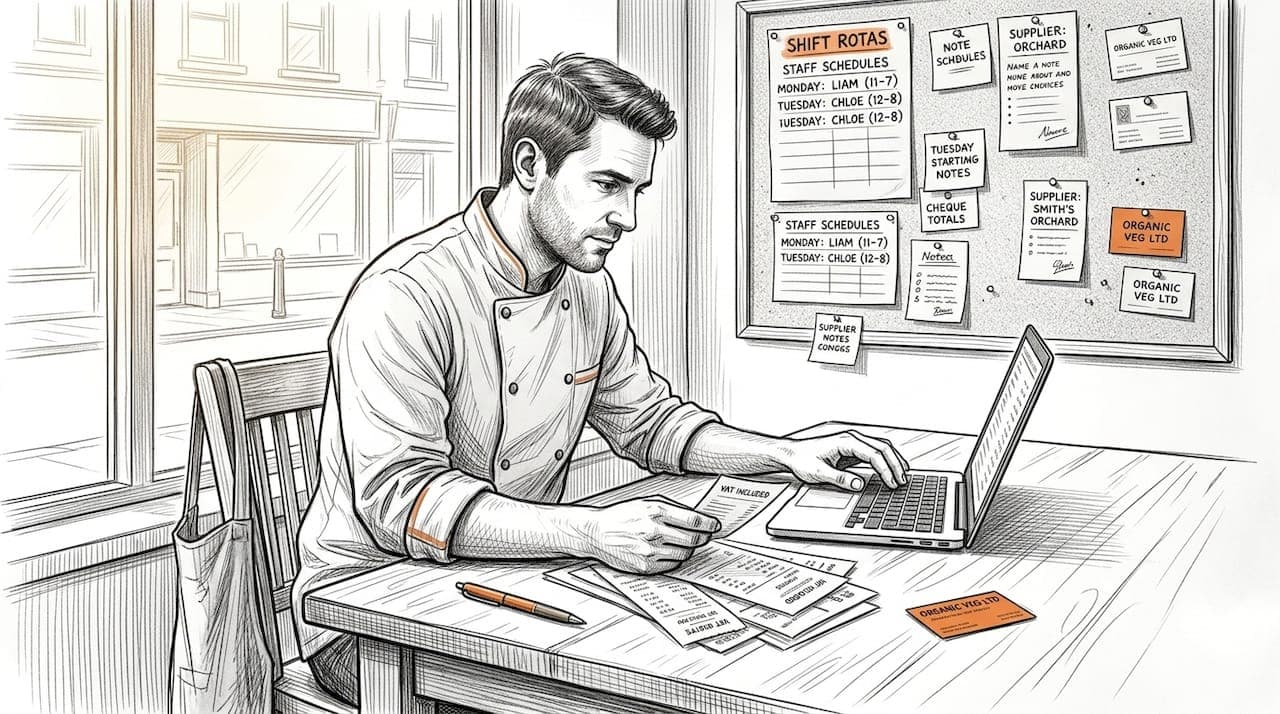
Independent restaurant owners in the UK often spend hours each week sorting receipts, entering invoices, and reconciling bank statements manually. This tedious process not only consumes valuable time that could be spent improving service or developing menus, but also introduces costly errors that directly impact profitability. Automated expense tracking transforms this burden by capturing, categorising, and reporting expenses in real time, giving you immediate visibility into operating costs. This guide explains what automated expense tracking is, how it works for restaurants, and why it matters for controlling costs and boosting your bottom line in 2026.
Table of Contents
- How automated expense tracking works in restaurants
- Why automation matters for UK restaurant cost control
- Challenges and expert tips for successful implementation
- Applying automated expense tracking for sustained restaurant growth
- Discover Kosts for streamlined expense tracking
Key takeaways
| Point | Details |
|---|---|
| Time savings | Automated expense tracking saves up to 140 hours yearly by eliminating manual receipt capture and categorisation. |
| Profitability boost | Real-time alerts on price changes and reduced manual errors help protect thin hospitality margins. |
| Implementation challenges | Integration issues and employee adoption require proactive management and training. |
| Compliance advantage | Consistent categories and automated records simplify UK Making Tax Digital requirements. |
| Bookkeeping efficiency | Automation cuts bookkeeping from 170 hours to 30 hours per year, freeing owners to focus on growth. |
How automated expense tracking works in restaurants
Automated expense tracking uses software to capture, categorise, and report business expenses without manual data entry. For UK restaurants, this means no more spreadsheets or shoeboxes full of receipts. The technology relies on several core functionalities that work together seamlessly.
Optical Character Recognition scans receipts and invoices, extracting supplier names, amounts, dates, and line items automatically. You simply photograph a receipt with your mobile or forward an invoice email, and the software reads the data within seconds. Bank feed imports connect directly to your business accounts, pulling transaction data automatically each day. Email forwarding lets suppliers send invoices straight into your expense system, where the software processes them without your involvement.
Integration with accounting platforms like Xero ensures your financial data stays synchronised in real time. When you capture an expense in your tracking software, it flows automatically into your accounting system, updating your profit and loss statement and balance sheet instantly. This eliminates double entry and keeps your books current without extra effort.
The typical workflow follows a simple pattern. First, you capture the expense through photo, email, or bank feed. Second, the software categorises it based on rules you've established, such as "meat supplier" or "utilities". Third, the system generates reports showing spending by category, supplier, or time period. Finally, you review the data and make informed decisions about your restaurant cost control workflow.
Modern expense tracking achieves over 90% accuracy in automatic categorisation, dramatically reducing errors compared to manual methods. The time savings are substantial: restaurants report saving approximately 140 hours per year by eliminating manual receipt processing. That's nearly four working weeks you can redirect toward improving operations, training staff, or developing new menu items.
Key features that benefit restaurants include:
- Real-time expense visibility across all locations and departments
- Automatic currency conversion for international suppliers
- Mobile apps that let managers capture expenses on the go
- Customisable categories matching your specific cost structure
- Audit trails showing who entered or approved each expense
The software learns from your corrections, improving accuracy over time. When you adjust a miscategorised expense, the system remembers your preference and applies it to similar transactions in future. This machine learning capability makes automation increasingly effective the longer you use it.
Why automation matters for UK restaurant cost control
UK restaurants operate on notoriously thin margins, with most establishments targeting food costs between 28% and 35% of sales. Occupancy costs should stay between 6% and 10%, whilst labour typically consumes 25% to 35%. These tight benchmarks leave little room for error, making precise expense tracking essential for survival.
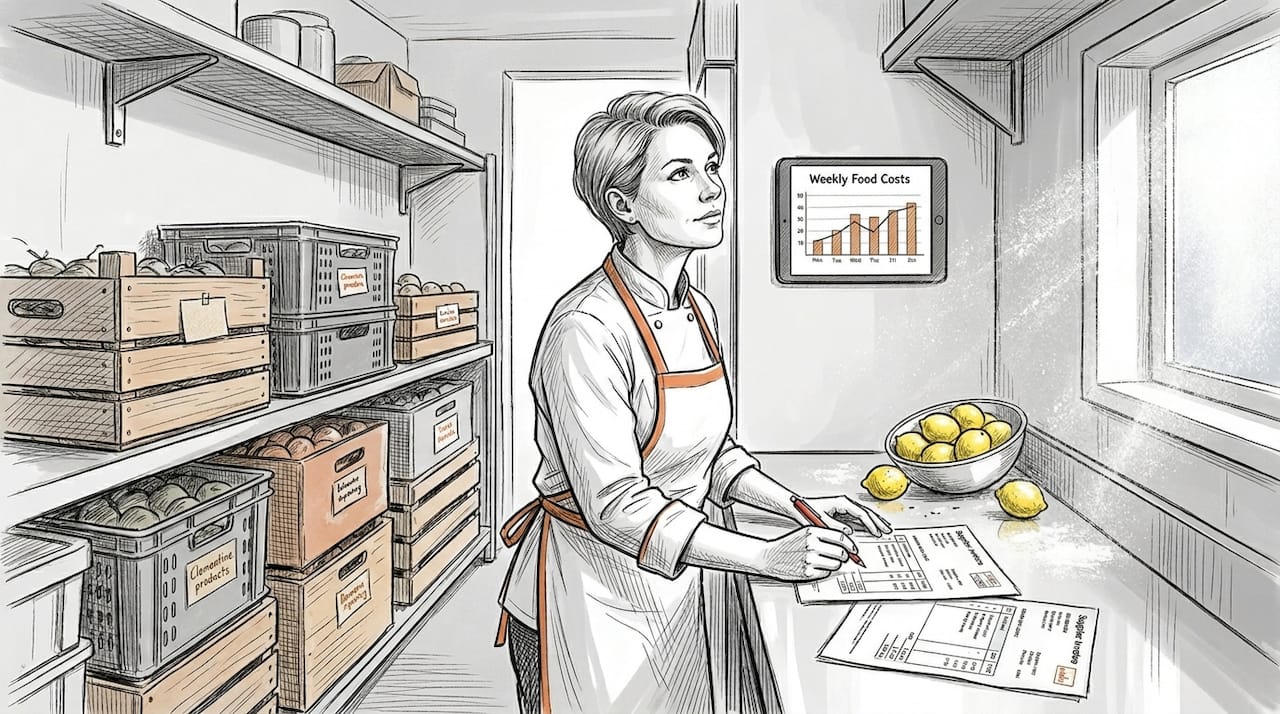
Inflation has squeezed these margins even tighter in recent years. Food costs have risen sharply, forcing restaurants to either raise prices or accept lower profitability. Technology spending has increased to 9% of sales post-2020 as operators invest in tools to maintain competitiveness. Automated expense tracking helps you navigate these pressures by providing immediate visibility when costs drift out of line.
Real-time alerts notify you the moment a supplier increases prices, letting you respond quickly. You might negotiate better terms, find alternative suppliers, or adjust menu pricing before the change impacts your bottom line. Without automation, these increases often go unnoticed for weeks or months, silently eroding profitability.
Fraud prevention becomes more effective with automated oversight. The hospitality industry loses an estimated £150 billion yearly to fraud globally, with significant UK exposure. Automated systems flag unusual transactions, duplicate invoices, and expenses that don't match established patterns. This vigilance protects your business from both external fraud and internal misuse.
Gross profit margins improve measurably when you streamline restaurant cost control through automation. Restaurants report margin increases from around 60% to 80% by gaining better visibility into food costs and waste. Even a few percentage points of margin improvement translate to thousands of pounds in additional profit over a year.
Automation delivers several specific cost control benefits:
- Immediate identification of price increases from suppliers
- Accurate tracking of food cost percentages by menu item
- Detection of waste and theft through variance analysis
- Comparison of actual costs against budgets and forecasts
- Historical data enabling better negotiation with suppliers
One experienced restaurateur explained: "Before automation, we reviewed expenses monthly and often discovered problems too late to fix them. Now we see issues the same day and can act immediately. Our food cost percentage dropped by three points in the first year, which added over £20,000 to our annual profit."
The competitive advantage extends beyond direct cost savings. Faster, more accurate financial data lets you make confident decisions about menu changes, staffing levels, and expansion opportunities. You spend less time buried in paperwork and more time serving customers and building your business.
Challenges and expert tips for successful implementation
Despite clear benefits, automated expense tracking isn't without challenges. Understanding common pitfalls helps you avoid them and maximise your return on investment. The most frequent issues involve miscategorisation, integration difficulties, staff resistance, and data security concerns.
Miscategorisation occurs when software assigns expenses to the wrong category, particularly with ambiguous supplier names or unusual purchases. A delivery from a wholesaler might be categorised as "groceries" when it should be "beverages", skewing your cost analysis. Regular review of automated categorisations catches these errors before they compound.
Integration failures affect 31% of organisations attempting to connect expense software with existing accounting systems. Compatibility issues, outdated software versions, and incorrect setup all contribute to integration problems. Choosing expense tracking software that explicitly supports your accounting platform reduces this risk significantly.
Employee resistance represents a major implementation hurdle in hospitality settings. Kitchen staff and front-of-house managers accustomed to paper receipts may view new technology as complicated or unnecessary. Successful adoption requires hands-on training, clear explanations of benefits, and ongoing support during the transition period.
Data security demands careful attention when handling sensitive financial information. Automated systems store supplier details, pricing, and payment information that could be valuable to competitors or criminals. Ensure your chosen software uses encryption, secure servers, and regular backups. Verify that the provider complies with UK data protection regulations.
Seasonal and perishable invoice complexities challenge automation in restaurants. Seafood prices fluctuate weekly, produce costs vary with seasons, and special event purchases don't fit standard categories. Your expense tracking system needs flexibility to handle these variations without constant manual intervention.
Pro Tip: Always review automation outputs regularly, especially during the first three months. Set aside 30 minutes weekly to check categorisations, verify amounts, and correct any errors. This review helps the system learn your preferences and ensures data accuracy for compliance and decision making.
To ensure compliance with UK Making Tax Digital rules, follow these steps:
- Establish clear, consistent expense categories that match your accounting structure before starting automation.
- Maintain digital records of all receipts and invoices, as MTD requires digital record keeping.
- Verify that your expense tracking software can export data in formats accepted by HMRC.
- Schedule monthly reconciliations between your expense system and accounting software to catch discrepancies early.
- Document your processes and keep audit trails showing who entered or approved each expense.
- Test your VAT reporting to ensure automated categorisations correctly distinguish between standard, reduced, and zero-rated expenses.
Addressing these challenges proactively transforms potential obstacles into manageable tasks. Most restaurants find that initial setup effort pays dividends within weeks as automation begins saving time and improving accuracy.
Applying automated expense tracking for sustained restaurant growth
Successful implementation follows a structured approach that minimises disruption whilst maximising benefits. Start by selecting software that integrates with your existing accounting platform and matches your restaurant's size and complexity. Look for UK-focused solutions that understand hospitality-specific needs like perishable inventory and supplier payment terms.
Your implementation roadmap should include four key phases. First, complete software setup by connecting bank accounts, configuring categories, and establishing approval workflows. Second, train all staff who will capture or review expenses, providing hands-on practice with real receipts. Third, run parallel systems for one month, comparing automated results against your existing process to verify accuracy. Fourth, establish regular audit schedules to review categorisations and maintain data quality.
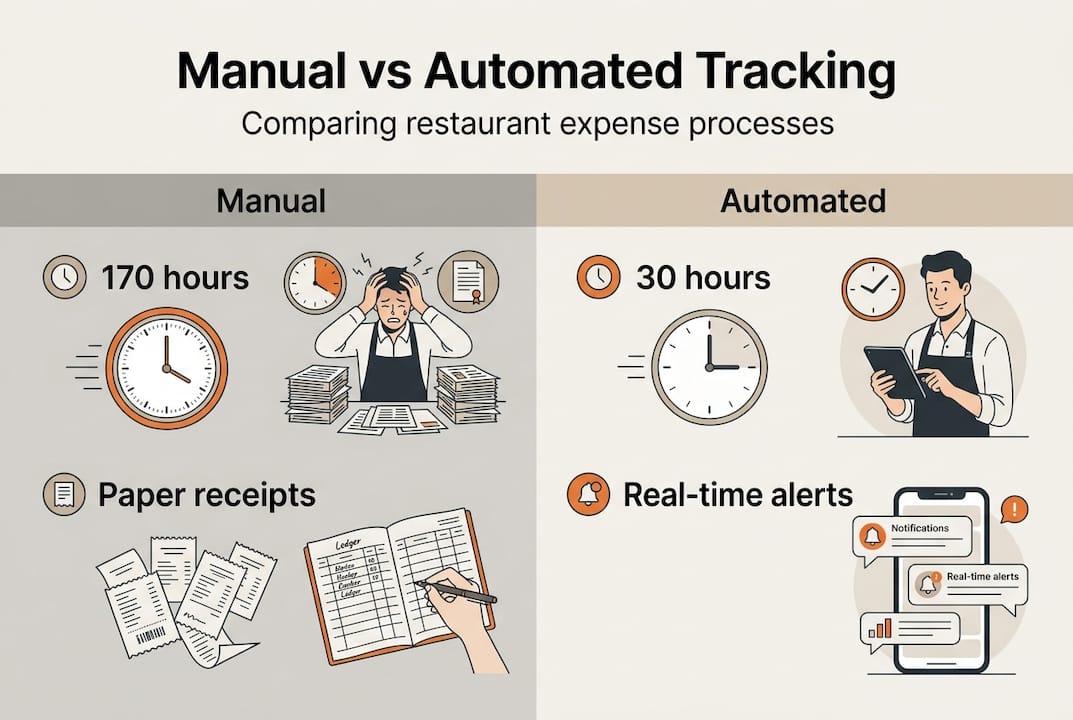
The difference between manual and automated approaches becomes clear when you compare them directly:
| Aspect | Manual bookkeeping | Automated tracking |
|---|---|---|
| Annual time investment | 170 hours per year | 30 hours per year |
| Error rate | 5-8% due to data entry mistakes | Under 1% with regular review |
| Real-time visibility | Updated weekly or monthly | Updated instantly |
| Cost per transaction | £2-4 including labour | £0.20-0.50 including software |
| Impact on profitability | Delayed response to cost changes | Immediate alerts enable quick action |
Leveraging insights from automation requires active engagement with your data. Review weekly spending reports to identify trends and anomalies. When a supplier's prices increase, you'll see it immediately and can negotiate or source alternatives. When usage of an ingredient spikes unexpectedly, you can investigate potential waste or theft before it becomes expensive.
Pro Tip: Use automation alerts to catch unexpected expenses early and adjust budgets accordingly. Set thresholds for each category, such as "alert me if meat purchases exceed £1,500 in any week". These early warnings let you investigate and respond whilst you still have options, rather than discovering problems during month-end reconciliation.
Continuous monitoring sustains the benefits of automation over time. Schedule monthly reviews of your cost control workflow optimisation to ensure categories remain relevant, integrations function properly, and staff follow established processes. Quarterly audits verify compliance with tax requirements and identify opportunities for further efficiency gains.
The time saved through automation creates capacity for strategic activities that drive growth. Instead of spending hours on data entry, you can analyse menu profitability, develop staff training programmes, or explore expansion opportunities. This shift from administrative tasks to value-creating work represents automation's most significant long-term benefit.
Successful restaurants treat automated expense tracking as a continuous improvement tool rather than a one-time implementation. They refine categories based on evolving needs, adjust alert thresholds as business scales, and train new staff thoroughly. This ongoing commitment ensures automation delivers compounding benefits year after year.
Discover Kosts for streamlined expense tracking
If you're ready to transform how you track restaurant expenses, Kosts automated expense tracking offers a purpose-built solution for UK independent restaurants. The platform automatically captures invoices through photos, PDFs, or email forwarding, then extracts supplier, item, and cost data using AI invoice scanning. Integration with Square and Xero synchronises your financial data automatically, giving you real-time visibility into food cost percentages, gross profit, and spending by supplier.
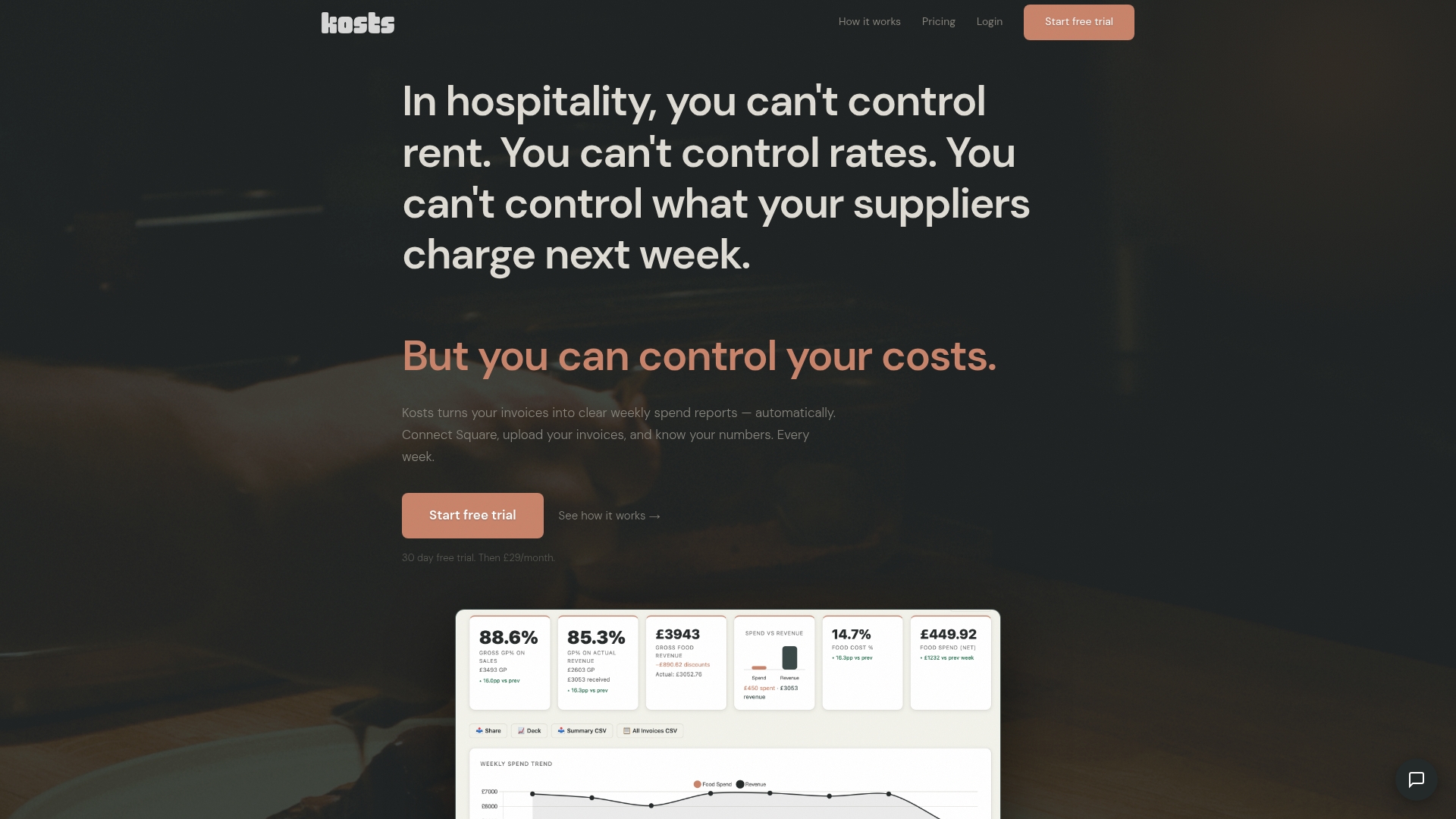
Built by a working chef who understands hospitality challenges, Kosts emphasises simplicity and relevant features over enterprise complexity. You'll get weekly spend reports that help you streamline your restaurant cost control workflow, team access for managers, and straightforward pricing with a 30-day free trial. The platform helps you save time, reduce errors, and protect profitability in an industry where margins matter more than ever.
Frequently asked questions
What exactly is automated expense tracking?
Automated expense tracking is software that captures, categorises, and reports business expenses without manual data entry. It uses technologies like optical character recognition to read receipts, bank feeds to import transactions, and integration with accounting systems to keep financial records current. For restaurants, this means invoices and receipts automatically become organised, categorised expense data.
How much time does automation actually save?
Restaurants typically save between 100 and 140 hours yearly by automating expense tracking. Manual bookkeeping requires approximately 170 hours per year, whilst automated systems reduce this to around 30 hours. The saved time lets you focus on improving service, developing menus, training staff, or exploring growth opportunities rather than sorting receipts and entering data.
Does automated expense tracking integrate with Xero?
Most modern expense tracking platforms integrate seamlessly with Xero and other popular UK accounting software. Integration synchronises expense data automatically, eliminating double entry and ensuring your profit and loss statement stays current. When selecting software, verify that it explicitly supports your accounting platform to avoid compatibility issues that affect 31% of implementations.
How accurate is automated categorisation?
Automated systems achieve over 90% accuracy in expense categorisation when properly configured. The software learns from your corrections, improving accuracy over time. However, you should always review automated outputs regularly, especially during the first three months. Set aside 30 minutes weekly to verify categorisations and correct any errors, which helps the system learn your preferences.
What are the first steps to start using automation?
Begin by selecting expense tracking software that integrates with your existing accounting platform and matches your restaurant's needs. Configure expense categories that align with your cost structure, connect your bank accounts and accounting software, then train staff on capturing receipts through mobile apps or email forwarding. Run parallel systems for one month to verify accuracy before fully transitioning from manual methods.
Will staff resist adopting new expense tracking technology?
Employee resistance is common when introducing new technology in hospitality settings. Overcome this through hands-on training that shows staff how automation makes their work easier, clear explanations of benefits like faster reimbursements, and ongoing support during the transition period. Choose user-friendly software with intuitive mobile apps to minimise the learning curve and encourage adoption.